Snack
Dasik
Korean Tea Cookie
Elegant pressed rice or sesame flour cookies traditionally served at Korean tea ceremonies and ceremonial occasions.
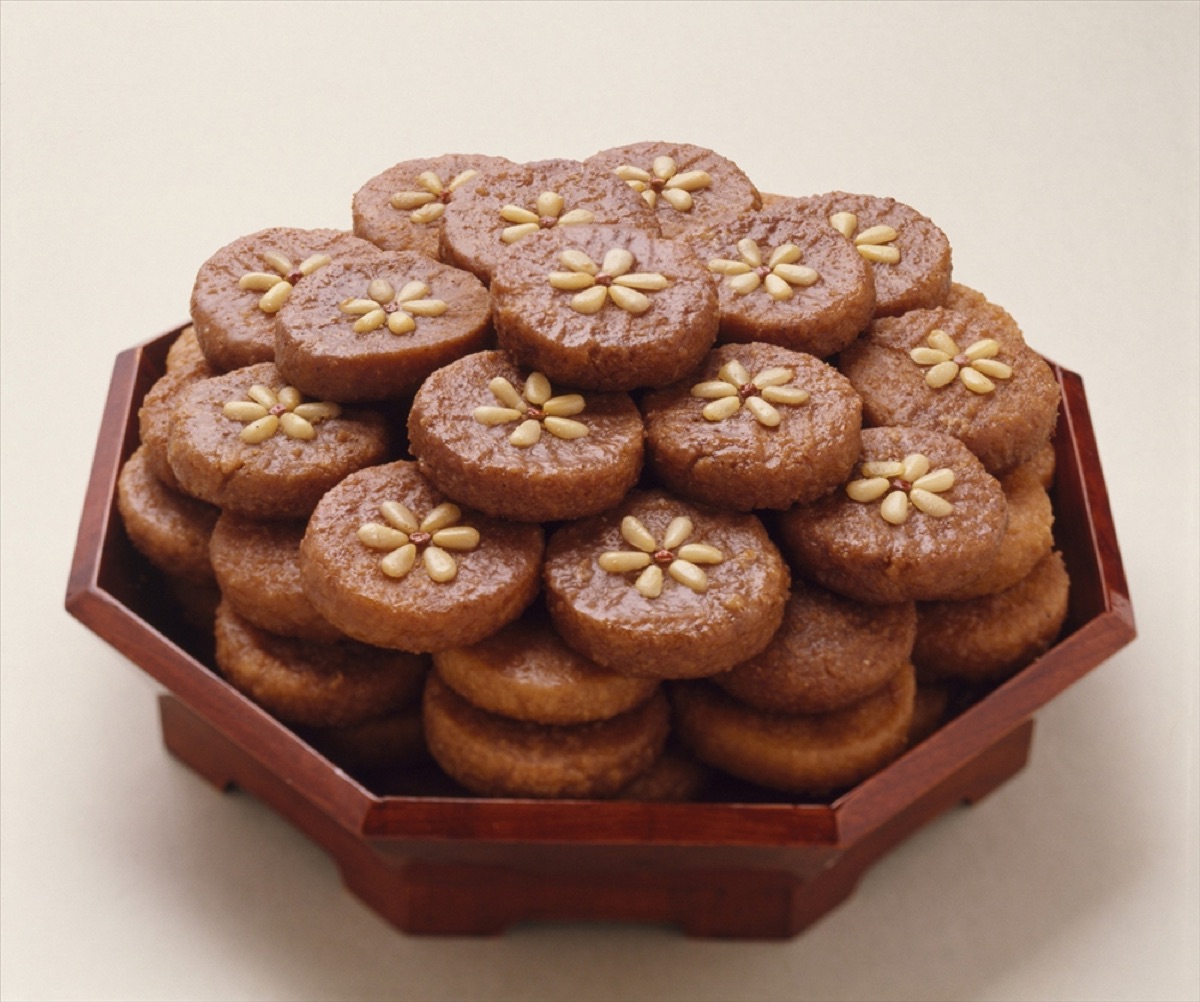
Dasik are some of the most refined and beautiful items in the Korean confectionery tradition, created by pressing moistened grain, sesame, or pine pollen flour into carved wooden molds (dasikpan) that imprint intricate patterns — flowers, clouds, characters — onto the surface of each piece. They were historically served at royal court banquets, ancestral rites (jesa), and weddings, representing the highest level of Korean culinary aesthetics applied to a small bite-sized sweet. The most prized variety is made from pollen (songhwa dasik), which has a pale golden color and an ethereal, faintly floral flavor unlike anything else in the Korean pantry. Sesame dasik (chamkkae dasik) is more common and has a deep, rich nuttiness from toasted black or white sesame, while rice dasik has a mild, clean sweetness. The texture is uniquely dense and slightly powdery, dissolving slowly on the tongue in a way that is perfectly suited to the meditative pace of a traditional tea ceremony. Though modern Koreans rarely make dasik at home, they are still sold at traditional market confectionery shops and given as gifts during Chuseok and Lunar New Year.
✦ Tastypinch tip
Fingers or small wooden picks are traditional; the pieces are very delicate.
How to eat it
- Place the whole piece on your tongue and let it dissolve slowly.
- Sip green tea or barley tea between each piece to cleanse the palate.
- Admire the molded pattern before eating — the visual presentation is intentional.
Common mistakes
- Expecting a light texture — dasik is quite dense and calorie-rich despite its small size.
Where to try it
- Insadong traditional tea houses, Seoul
- Jeonju Hanok Village traditional confectionery shops
Comments