Noodle
Jjolmyeon
Chewy Spicy Mixed Noodles
Extra-chewy, thick wheat noodles tossed in a spicy-sweet gochujang sauce — a beloved Korean street food born from a factory mistake.
Jjolmyeon has one of Korea's most charming origin stories: in the 1970s, a noodle factory in Incheon accidentally extruded noodles far too thick for naengmyeon, and rather than discard them, a nearby restaurant owner began serving them dressed in the same spicy naengmyeon sauce. The accidental creation was a hit, and within a decade jjolmyeon spread across the country as a school cafeteria and bunsik (snack bar) staple beloved by students and young people. The noodles' extraordinary chewiness — often described by Koreans as 'jjolgit,' a satisfying, springy resistance — is their defining virtue, and the gochujang-based sauce clings to every strand with a sweet heat that is hard to stop eating. Bean sprouts, cucumber, and cabbage are standard accompaniments, providing refreshing crunch against the chewy noodles. Jjolmyeon remains intimately associated with Korean school life and nostalgia — adults often return to the bunsik restaurants of their youth for a bowl that tastes exactly like being sixteen again.
✦ Tastypinch tip
The noodles spring back when you pick them up — grip a small portion and eat in quick bites.
How to eat it
- Mix thoroughly before eating — the sauce settles at the bottom.
- Eat with a side of fishcake broth (odeng soup) available at bunsik restaurants.
- The chewiness is meant to be enjoyed; do not expect soft noodles.
Common mistakes
- Mistaking it for bibim-naengmyeon — jjolmyeon is thicker, chewier, and less sour.
Where to try it
- Korean bunsik (snack bar) restaurants nationwide
- School-area eateries
You may also like
Bibim-naengmyeon
Chewy buckwheat noodles tossed in a fiery-sweet gochujang sauce, served cold.
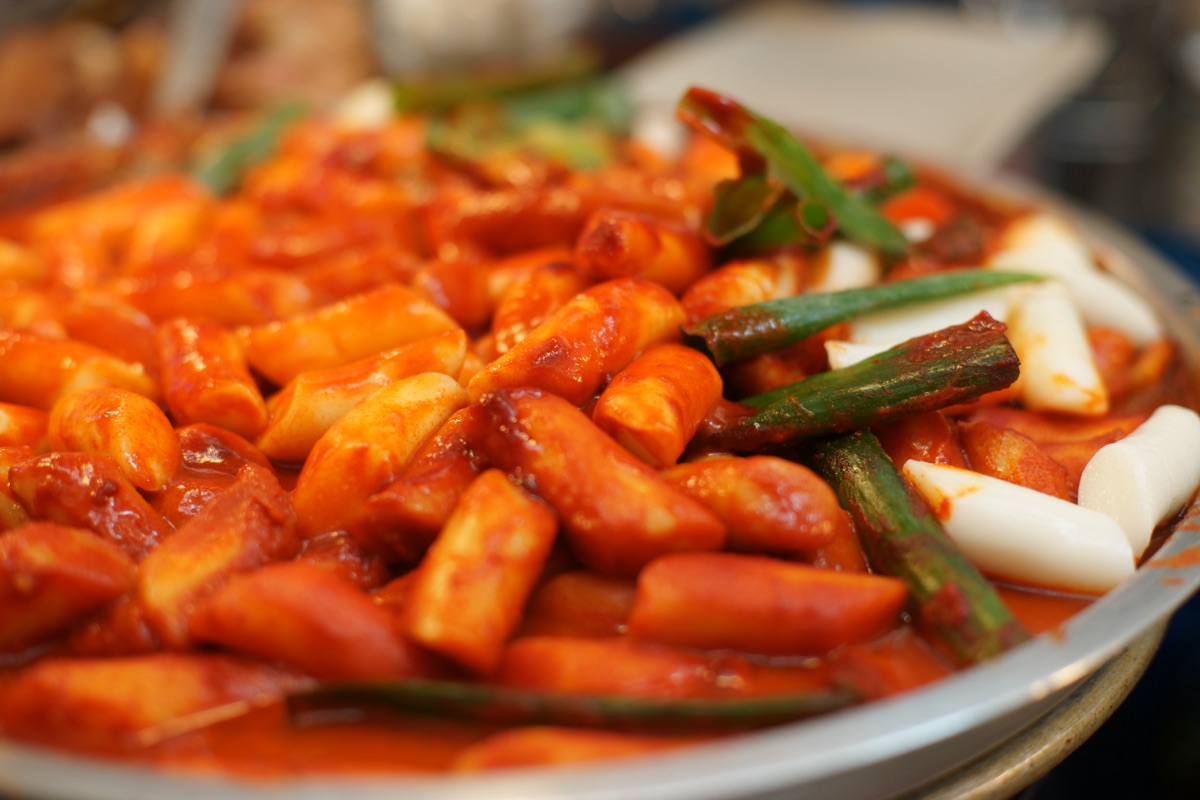
Tteokbokki
Chewy rice cakes simmered in a sweet-spicy gochujang sauce — Korea's most iconic street snack.
Ramyeon
Instant wheat noodles in a spicy, savory broth — Korea's most-eaten quick meal, cooked in minutes.
Eat it the right way
Curated for this dish
Ergonomic Korean stainless chopsticks
Built for beginners — grip 쫄면 and every Korean dish with confidence. 36,000원 / $35
Comments