Soup & stew
Kimchi-jjigae
Kimchi Stew
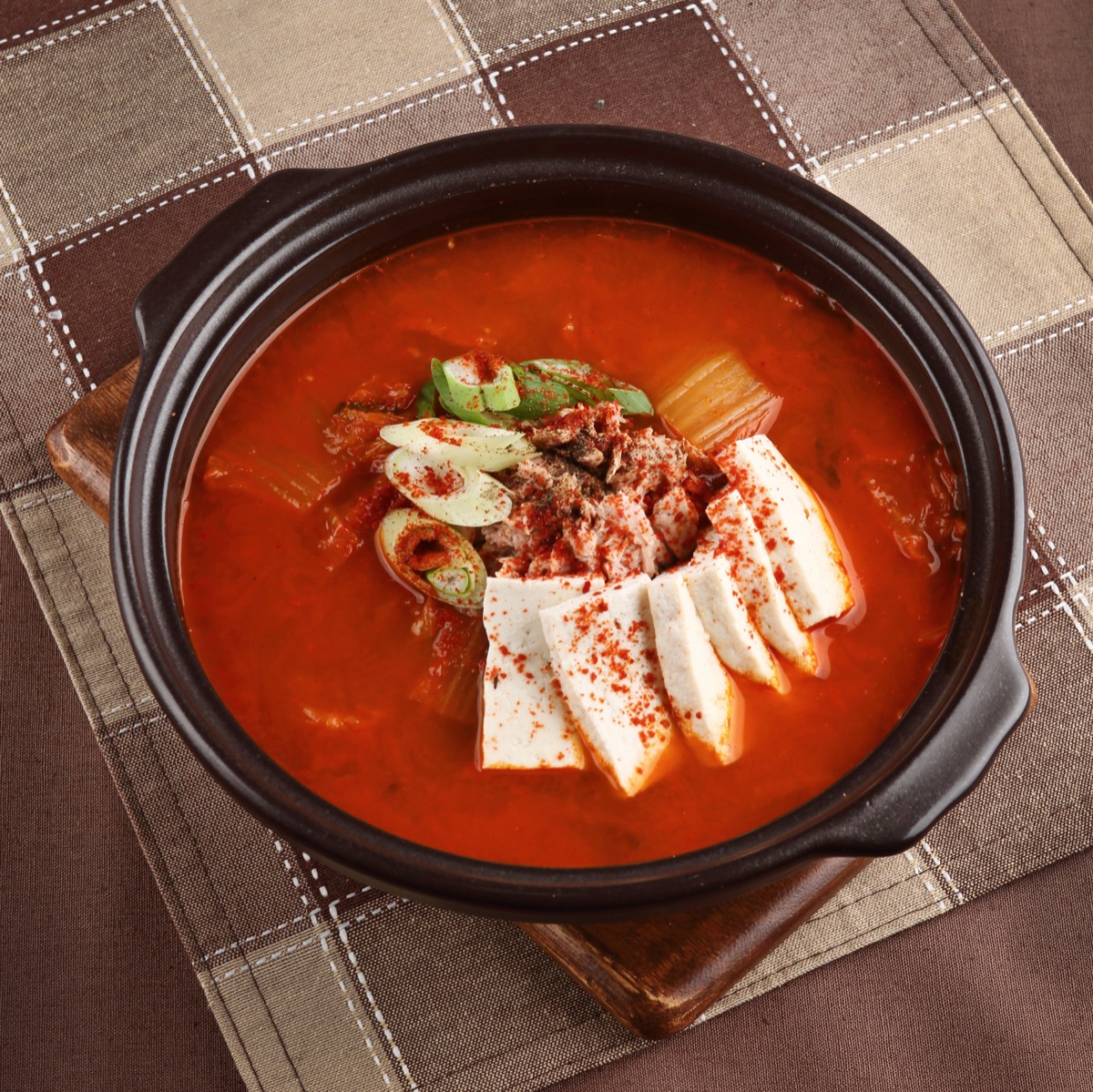
A simmering stew of aged kimchi, pork, and tofu — one of the most ordered everyday meals in Korea.
Kimchi-jjigae is the everyday stew Koreans practically grow up on, built specifically from kimchi that has fermented past its fresh prime. The long-aged kimchi turns deeply sour and savory as it simmers with pork and tofu, mellowing into a rich, slightly funky broth that's far more than the sum of its parts. It bubbles at countless lunch counters and home dinner tables, served in its own pot with a bowl of plain rice to balance the intensity. Every household has its own version, and arguments over the 'best' kimchi for it are genuine. It's spicy but approachable, and for many it tastes like home.
✦ Tastypinch tip
Slide your chopsticks under a tofu cube from the side instead of pinching the top — soft tofu crumbles when squeezed.
How to eat it
- Eat it with a bowl of plain rice — spoon the stew and rice together, bite by bite.
- It's fine to spoon rice into the stew, or stew over rice; both are normal.
- Pick up tofu and pork with chopsticks; use the spoon for broth.
Common mistakes
- It's a rice companion, not a standalone soup — pair every few spoonfuls with rice.
- The pot is shared at the table; ladle into your own bowl rather than eating straight from it with others.
Where to try it
- Any Korean home-style restaurant (한식당, 백반집)
- Lunch sets in office districts
- Late-night spots that serve it alongside soju
You may also like
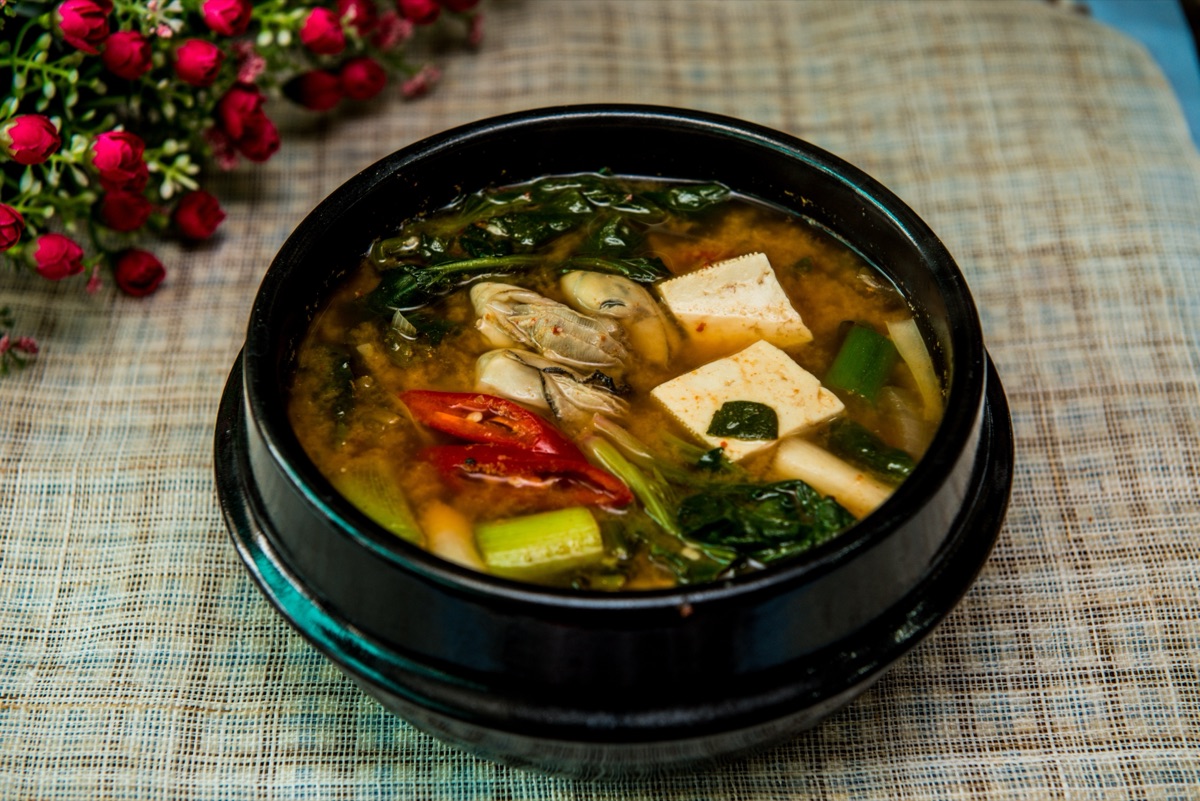
Doenjang-jjigae
An earthy stew of fermented soybean paste with tofu and vegetables — the savory backbone of the Korean table.
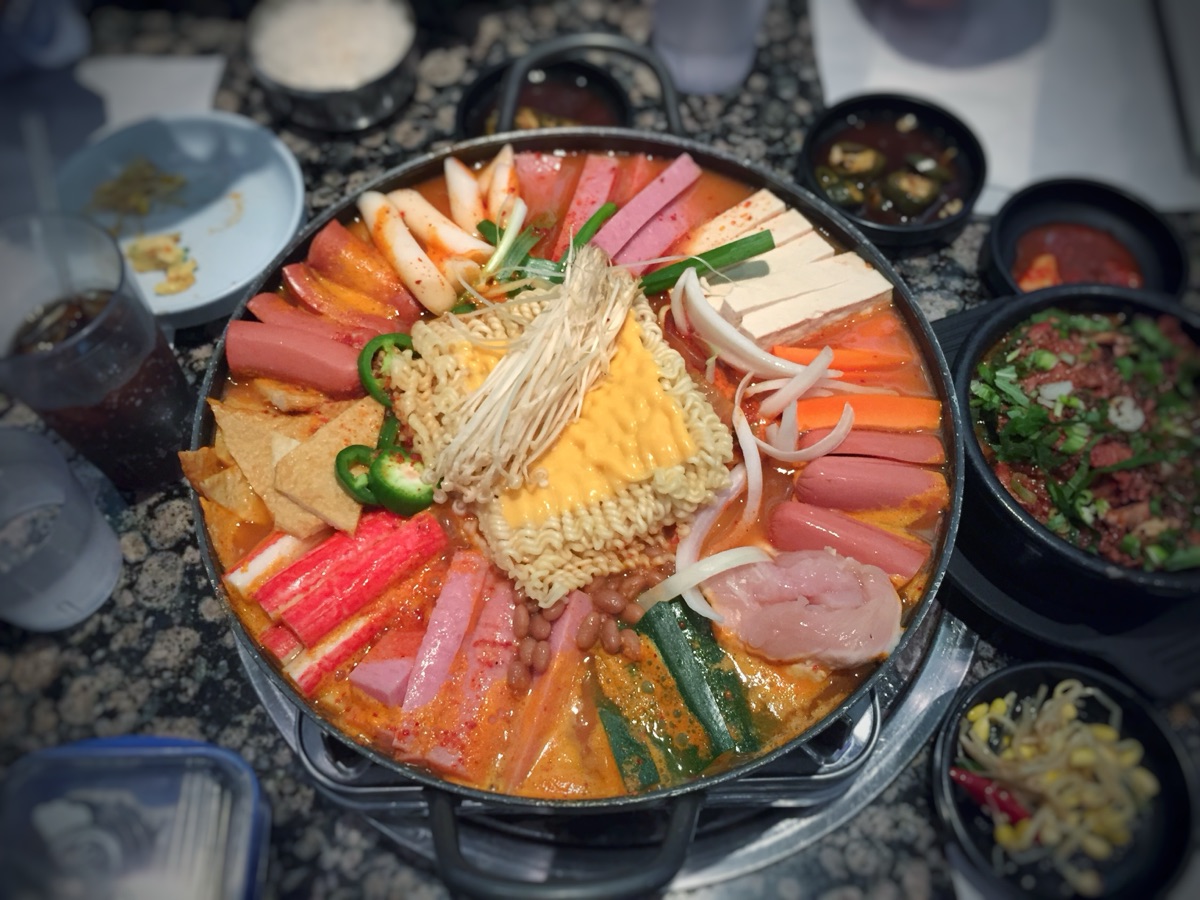
Budae-jjigae
A bubbling 'army stew' of kimchi, sausage, Spam, and ramyeon noodles — a spicy, hearty shared pot.
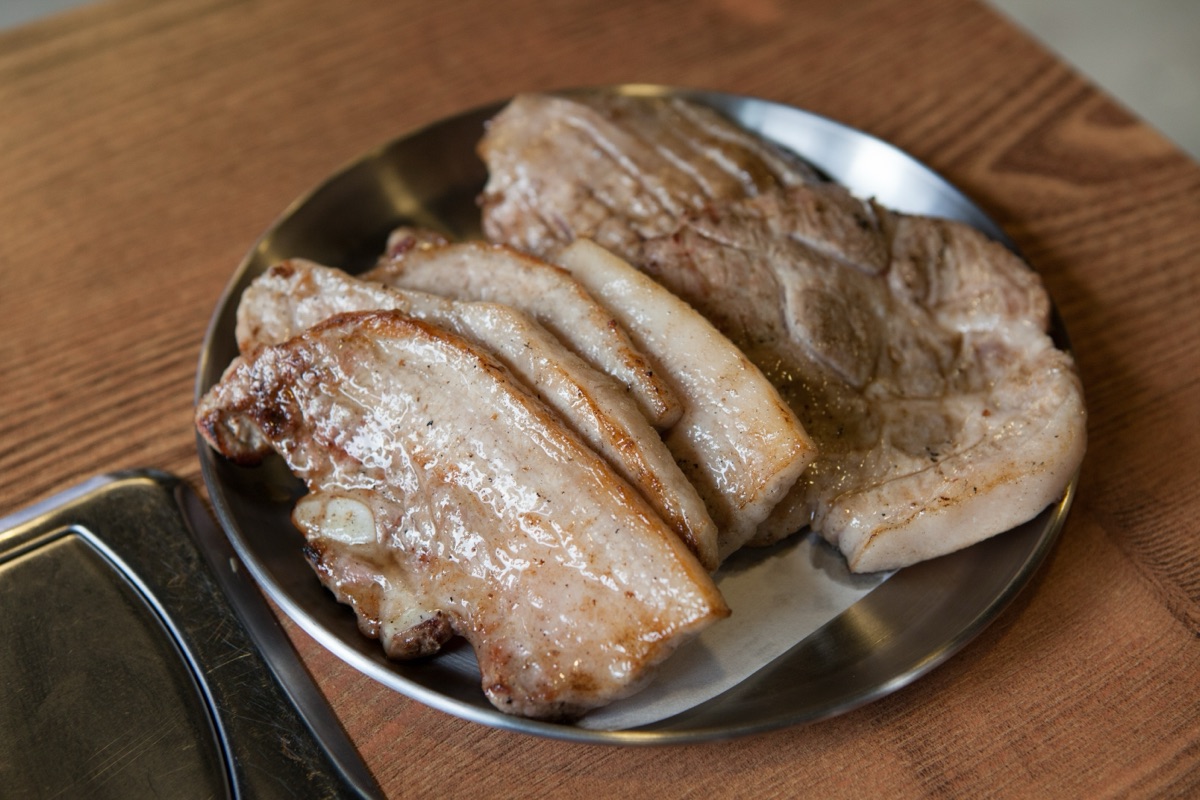
Samgyeopsal-gui
Thick-cut pork belly grilled at the table, wrapped in lettuce with garlic, ssamjang, and grilled kimchi.
Eat it the right way
Curated for this dish
Ergonomic Korean stainless chopsticks
Built for beginners — grip 김치찌개 and every Korean dish with confidence. 36,000원 / $35
Comments