Noodle
Japgoksu
Multigrain Cold Noodles
Cold noodles made from a blend of grains including buckwheat, barley, and wheat — a healthy, earthy Korean noodle option.
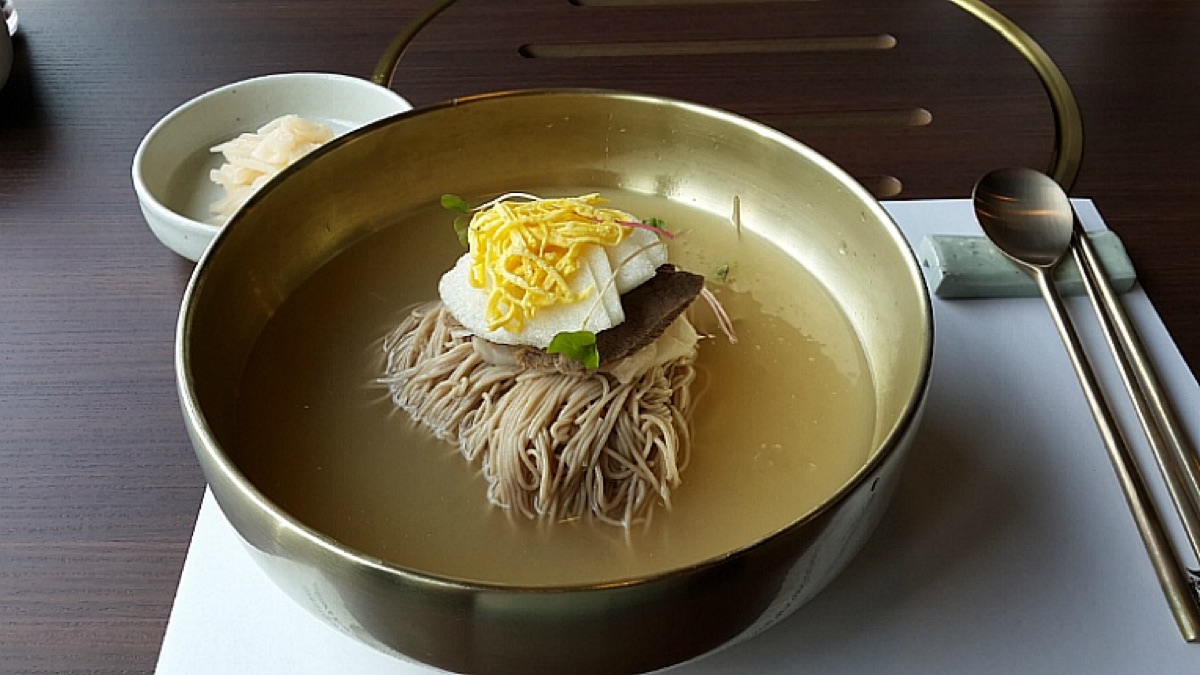
Japgoksu, literally 'mixed grain noodles,' represents the growing Korean interest in whole-grain and multigrain foods that began in the 1980s alongside rising health consciousness in Korean society. The noodles are typically made from a blend of buckwheat, barley, and wheat flour — sometimes with the addition of black sesame, perilla, or sweet potato starch — which gives them a mottled grey-brown appearance and a complex, nutty flavor that plain wheat noodles lack. They are served cold in the manner of naengmyeon, with either a clear broth or a gochujang sauce, and the grain flavor pairs particularly well with the acidity of vinegar-seasoned toppings. The dish is popular at health-focused restaurants and among older Koreans who associate multigrain foods with traditional agricultural wisdom and physical vitality. Food-conscious younger Koreans have embraced it as a higher-fiber, lower-glycemic-index alternative to standard wheat noodles, and it has found a growing market in the premium noodle restaurant segment. The flavor is more assertive than plain naengmyeon and rewards diners who appreciate whole-grain character.
✦ Tastypinch tip
Multigrain noodles are slightly more brittle than pure wheat noodles — handle with medium firmness.
How to eat it
- Add vinegar and mustard in small amounts — the grain flavor is complex and benefits from restraint.
- Use scissors if the noodles are long.
- Appreciate the earthy, nutty flavor before adding too many condiments.
Common mistakes
- Expecting the mild flavor of standard naengmyeon — japgoksu has a more assertive grain character.
Where to try it
- Health-focused Korean restaurants
- Naengmyeon specialty restaurants with premium grain options
You may also like
Memil-guksu
Pure buckwheat noodles served in a cold or warm dipping broth — Korea's meditative, minimalist noodle tradition.
Makguksu
Rustic buckwheat noodles from Gangwon Province, served cold with a spicy-tangy sauce or clear broth.
Mul-naengmyeon
Chewy buckwheat noodles in an icy, tangy broth — Korea's signature cold noodle dish for summer heat.
Eat it the right way
Curated for this dish
Ergonomic Korean stainless chopsticks
Built for beginners — grip 잡곡수 and every Korean dish with confidence. 36,000원 / $35
Comments