Rice
Doenjang-jjigae-bap
Fermented Soybean Paste Stew Rice Set
The deeply savoury fermented soybean stew paired with steamed rice — a cornerstone of Korean everyday dining.
Doenjang-jjigae-bap represents the very heart of Korean gastronomic identity: a dark, bubbling clay pot of fermented soybean paste stew set alongside a bowl of white rice constitutes the meal that millions of Koreans eat for breakfast, lunch, or dinner without variation and without complaint. The stew's umami depth comes from doenjang — a fermented soybean paste that develops complexity over months or years — combined with zucchini, tofu, mushrooms, and clams or anchovies. Unlike the lighter Japanese miso soup it superficially resembles, Korean doenjang-jjigae is robust and chunky, a meal in itself rather than a supporting soup. Home cooks argue passionately about the correct water-to-doenjang ratio and whether to use home-made (jip-doenjang) or commercial paste. Korean nutritionists frequently highlight doenjang's probiotic and isoflavone content as central to traditional Korean longevity. The stew is inseparable from the rice it accompanies — one without the other is considered incomplete.
How to eat it
- Ladle a portion of the stew over the rice or eat them alternately.
- Eat the tofu and vegetables with chopsticks; drink the broth with a spoon.
Where to try it
- Any Korean home kitchen
- Traditional Korean set-meal restaurants nationwide
You may also like
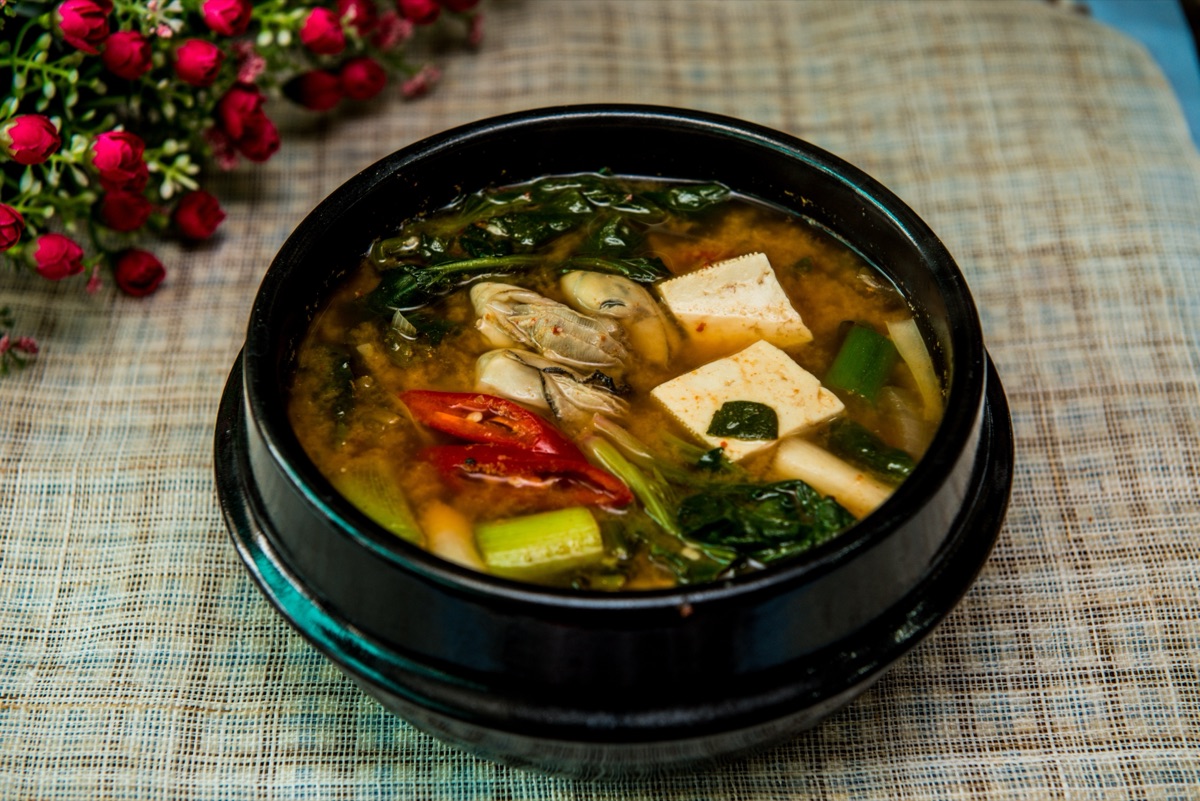
Doenjang-jjigae
An earthy stew of fermented soybean paste with tofu and vegetables — the savory backbone of the Korean table.
Kimchi-jjigae-bap
The quintessential Korean meal pairing of bubbling kimchi jjigae stew with a bowl of steamed rice.
Ssambap
Steamed rice and savory fillings wrapped in fresh leafy greens.
Eat it the right way
Curated for this dish
Ergonomic Korean stainless chopsticks
Built for beginners — grip 된장찌개밥 and every Korean dish with confidence. 36,000원 / $35
Comments