Noodle
Memil-guksu
Buckwheat Noodles in Broth
Pure buckwheat noodles served in a cold or warm dipping broth — Korea's meditative, minimalist noodle tradition.
Memil-guksu represents Korea's oldest and most austere noodle tradition, predating the Chinese and Japanese influences that shaped later noodle dishes. Buckwheat, called memil, has been cultivated on Korea's volcanic highlands and in the dry inland regions of Gangwon Province for over a thousand years, and its flour produces noodles with a distinctive grey-brown color, earthy aroma, and a pleasantly grainy texture that is entirely unlike wheat noodles. The classic preparation is soba-style: cold noodles with a soy-based dipping broth (japgeori) flavored with dried anchovy, green onion, and a touch of wasabi or Korean mustard. Some versions serve the noodles in a warm broth with simple vegetable garnishes. The dish carries an intellectual, temple-food quality that Koreans associate with health consciousness and simplicity — it appears frequently on menus at mountain temples and health-focused restaurants. The noodles must be eaten quickly as they soften and break apart faster than wheat noodles.
✦ Tastypinch tip
Buckwheat noodles are fragile — lift gently and dip without dunking too vigorously.
How to eat it
- Dip small bundles of noodles into the broth rather than pouring broth over noodles.
- Add a small amount of mustard to the broth to your taste.
- Drink the remaining dipping broth at the end, diluted with hot buckwheat water if provided.
Common mistakes
- Waiting too long to eat — buckwheat noodles disintegrate faster than wheat noodles.
Where to try it
- Pil-dong Memilmuk (Seoul)
- Gangwon Province buckwheat noodle specialty restaurants
You may also like
Makguksu
Rustic buckwheat noodles from Gangwon Province, served cold with a spicy-tangy sauce or clear broth.
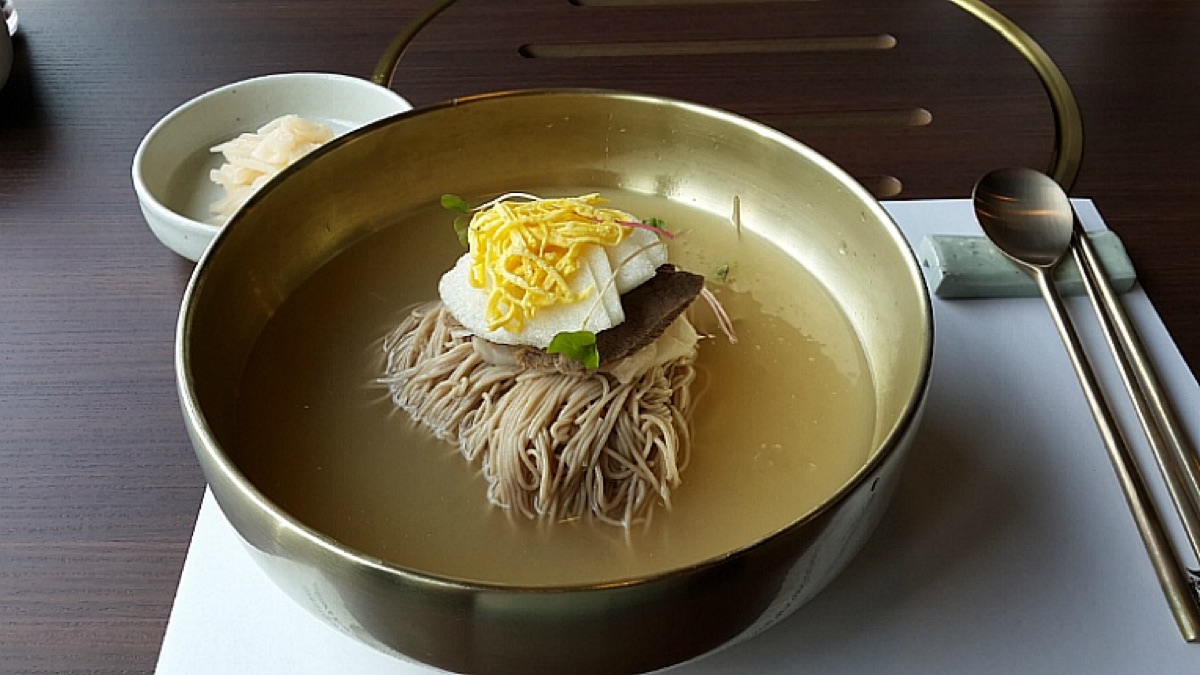
Mul-naengmyeon
Chewy buckwheat noodles in an icy, tangy broth — Korea's signature cold noodle dish for summer heat.

Janchi-guksu
Delicate wheat vermicelli in a clear anchovy broth, traditionally served at celebrations and special gatherings.
Eat it the right way
Curated for this dish
Ergonomic Korean stainless chopsticks
Built for beginners — grip 메밀국수 and every Korean dish with confidence. 36,000원 / $35
Comments