Grilled
Ojingeo-gui
Grilled Squid
Whole squid scored and grilled over charcoal, basted with a spicy-sweet gochujang sauce until gloriously caramelised.
Ojingeo-gui is one of the most evocative smells of Korean street food, a combination of charring seafood and sweet gochujang glaze that drifts from coastal fish markets and roadside stalls with an irresistible intensity. The squid is split open, scored with a cross-hatch pattern so the sauce penetrates the flesh and the pieces curl attractively when they hit the heat, and then basted repeatedly during cooking to build up layers of glossy, spicy coating. Gangwon Province on Korea's northeast coast, particularly the areas around Jumunjin and Sokcho, is considered the heartland of Korean squid fishing and grilling culture, and the region hosts an annual squid festival that draws tens of thousands of visitors. Korean grandmothers in coastal towns are often credited with the best technique — knowing exactly when to flip, how vigorously to brush the sauce, and when the moment of perfect doneness arrives — a skill observed and absorbed over decades. Dried squid is also grilled and eaten as an anju snack with drinks, but the fresh version is far more prized and considered a proper meal component. The chewy texture and bold glaze make it a favourite among younger Koreans who want something more assertively flavoured than mild fish dishes.
✦ Tastypinch tip
Squid springs back when you press it — use firm pressure with chopsticks and eat in small sections.
How to eat it
- Score the squid body before grilling so the sauce can penetrate and pieces curl evenly.
- Baste with gochujang sauce during grilling for layered caramelisation.
- Cut into strips with scissors at the table for easy eating.
- Alternate bites of spicy squid with neutral pickled radish.
Where to try it
- Jumunjin squid street, Gangwon-do
- Pohang fish market stalls
You may also like
Haemul-gui
An abundant spread of seasonal seafood grilled over charcoal or a live flame, served straight from the grill to the table.
Nakji-bokkeum
Live or fresh octopus stir-fried at fierce heat with gochujang, creating a spicy, smoky, and intensely flavoured dish.
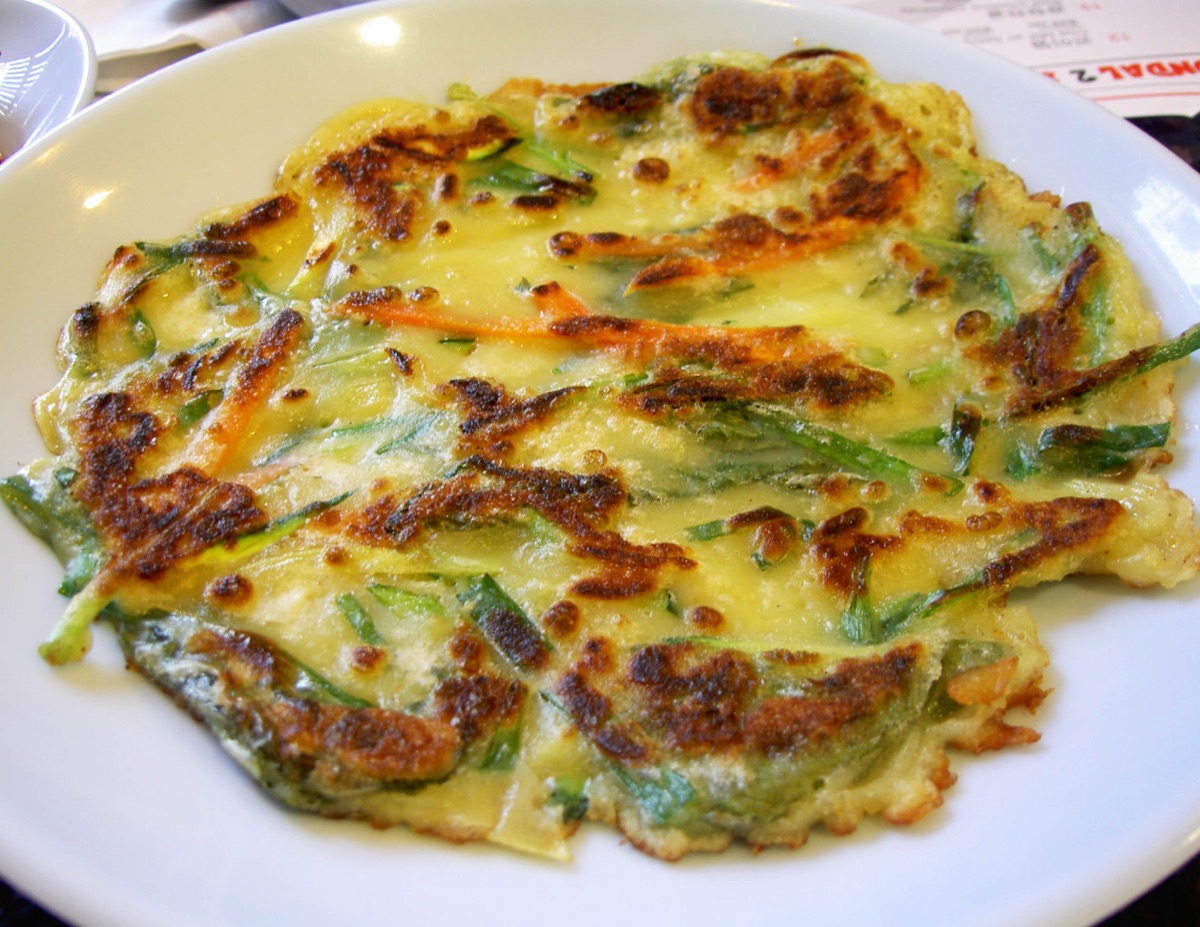
Haemul-pajeon
A crisp scallion-and-seafood pancake — the classic rainy-day dish, best enjoyed with makgeolli.
Eat it the right way
Curated for this dish
Ergonomic Korean stainless chopsticks
Built for beginners — grip 오징어구이 and every Korean dish with confidence. 36,000원 / $35
Comments