Grilled
Osam-bulgogi
Spicy Squid and Pork Belly Stir-Grill
Squid and pork belly cooked together in a spicy gochujang sauce — an unlikely combination that has become a beloved Korean fusion classic.
Osam-bulgogi combines 'o' from ojingeo (squid) and 'sam' from samgyeopsal (pork belly) with 'bulgogi' indicating a stir-grilled preparation, and the dish's name tells its entire story in three characters — an improbable surf-and-turf combination that somehow achieves a harmony greater than its parts. The dish is thought to have originated in Daejeon in the 1990s, where a restaurant owner experimented with combining the leftover proteins from two different dishes and discovered that the squid's oceanic brininess and the pork belly's fat worked in remarkable synergy with a bold gochujang-based sauce. The squid cooks quickly and absorbs the spicy sauce, while the pork belly renders its fat into the pan, creating a cooking medium that simultaneously braises and glazes everything in contact with it. Daejeon has since claimed the dish as a regional speciality, and the Daejeon osam-bulgogi experience — eating at a restaurant near the central market — is listed in Korean food travel guides as a must-do. The dish spread nationally in the 2000s through television food programmes that featured its creation story and unusual combination, and today it appears on Korean pub menus from Busan to Seoul. Koreans say the dish represents the improvisational creativity of Korean home cooking taken to its logical extreme.
How to eat it
- Eat with rice — the spice level demands it.
- Alternate bites of squid and pork to experience the textural contrast.
- Ask for the sauce to be mixed into rice at the end for a spicy bokkeum-bap finish.
- Cold beer or soju cuts through the heat effectively.
Common mistakes
- Ordering this as your first dish of the evening — build up to it.
Where to try it
- Daejeon central market restaurants, Daejeon
- Korean pubs (hof) serving seafood-pork combinations
You may also like
Ojingeo-gui
Whole squid scored and grilled over charcoal, basted with a spicy-sweet gochujang sauce until gloriously caramelised.
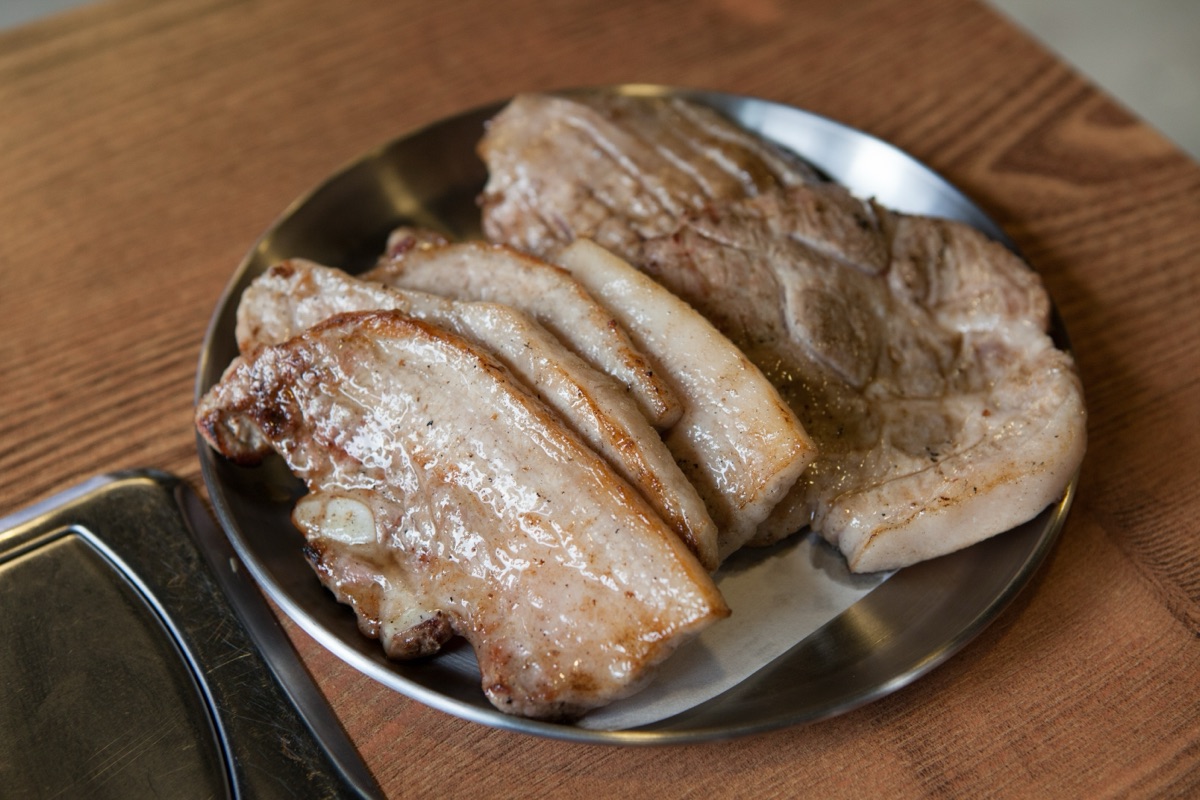
Samgyeopsal-gui
Thick-cut pork belly grilled at the table, wrapped in lettuce with garlic, ssamjang, and grilled kimchi.
Nakji-bokkeum
Live or fresh octopus stir-fried at fierce heat with gochujang, creating a spicy, smoky, and intensely flavoured dish.
Eat it the right way
Curated for this dish
Ergonomic Korean stainless chopsticks
Built for beginners — grip 오삼불고기 and every Korean dish with confidence. 36,000원 / $35
Comments