Noodle
Udong
Korean-style Udon Noodle Soup
Thick, chewy Japanese-origin udon noodles adapted into a lighter Korean broth, a staple at snack bars and pojangmacha.
Udong arrived in Korea during the Japanese colonial period and was thoroughly naturalized into Korean food culture — today it occupies its own distinct identity separate from Japanese udon, typically served in a more delicate, anchovy-based broth rather than the darker soy-mirin broth of Japan. Korean udong is a democratic food: it appears at every pojangmacha (street food tent), gimbap restaurant, school cafeteria, and highway rest stop in the country. The thick, pillowy noodles are almost always machine-made and sold frozen, which means a bowl can be prepared in minutes, making it the go-to quick lunch for office workers and students. Toppings are modest — fish cake slices, a soft-boiled egg, green onions, and perhaps a square of dried seaweed — but the broth's clean savory character ties everything together beautifully. On a cold night at a pojangmacha, wrapping your hands around a bowl of steaming udong while the city noise hums around you is one of the most characteristically Korean urban experiences imaginable.
✦ Tastypinch tip
Thick udon noodles are heavy — use a confident, firm grip to lift them.
How to eat it
- Eat with chopsticks for noodles and a spoon for broth.
- Add red pepper flakes or gochugaru from the condiment jar if desired.
- Fish cake slices can be eaten separately or alongside each noodle bite.
Common mistakes
- Expecting Japanese udon flavor — Korean udong broth is lighter and more delicate.
Where to try it
- Gimbap Cheonguk (nationwide chain)
- Any pojangmacha street tent in autumn and winter
You may also like
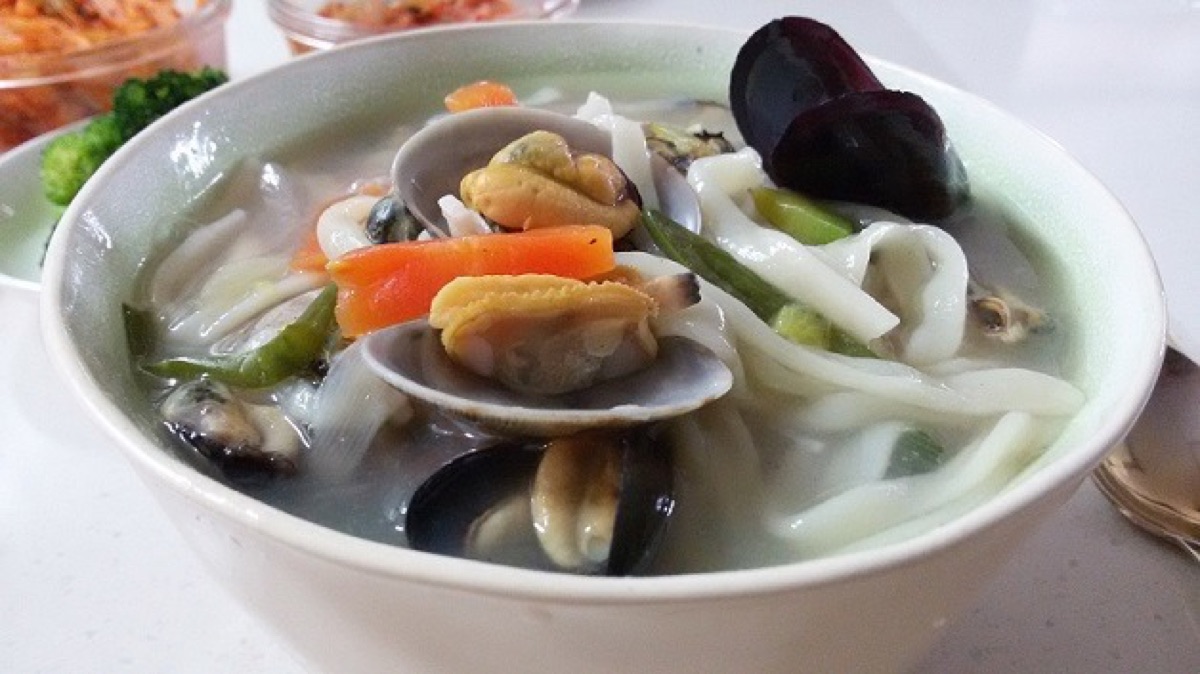
Kalguksu
Hand-cut wheat noodles in a warm, soothing broth — a homey comfort bowl, especially on rainy days.
Ramyeon
Instant wheat noodles in a spicy, savory broth — Korea's most-eaten quick meal, cooked in minutes.

Janchi-guksu
Delicate wheat vermicelli in a clear anchovy broth, traditionally served at celebrations and special gatherings.
Eat it the right way
Curated for this dish
Ergonomic Korean stainless chopsticks
Built for beginners — grip 우동 and every Korean dish with confidence. 36,000원 / $35
Comments