Soup & stew
Doenjang-guk
Soybean Paste Soup
A lighter, everyday version of soybean paste soup served daily in Korean homes, simpler and thinner than jjigae.
While doenjang-jjigae is the thick, robust stew version, doenjang-guk is its gentler sibling — a clear to semi-clear soup with a mild doenjang base, usually made fresh each morning as part of the banchan spread in Korean households. The distinction is subtle but meaningful: guk (soup) has a higher broth-to-ingredient ratio, making it a liquid companion to rice rather than a centrepiece stew. Common vegetables include zucchini, mushrooms, spinach, and tofu, and the broth is typically a light dried-anchovy or dried-kelp stock rather than the heavier stocks used for meat soups. Doenjang-guk is the soup that appears in every school cafeteria and most home lunch boxes — understated, affordable, and profoundly everyday. Its unpretentious nature has led to a mild cultural tension with doenjang-jjigae, which is sometimes seen as more substantial and 'serious,' but home cooks prize the guk version precisely because it is lighter and less filling. The fermented soybean paste contributes gut-friendly probiotics, and nutritionists frequently cite doenjang-guk as one of the healthiest components of the traditional Korean diet.
✦ Tastypinch tip
Use chopsticks to retrieve larger vegetable pieces; drink the broth with the bowl raised to the lips.
How to eat it
- Drink directly from the bowl or use a spoon.
- Eat alternately with rice and other banchan.
- Add a tiny pinch of salt if the doenjang flavour seems mild.
Where to try it
- Any Korean home kitchen or school cafeteria
- Traditional Korean set-meal (hansik) restaurants
You may also like
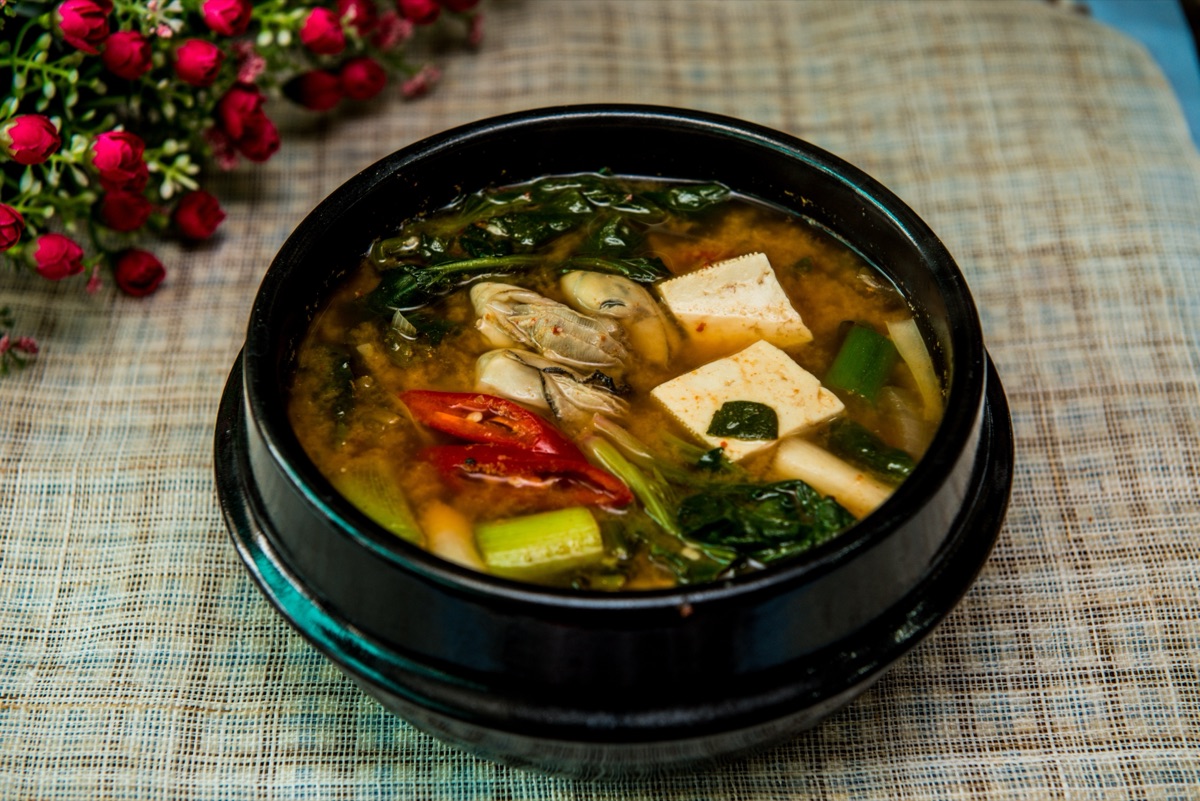
Doenjang-jjigae
An earthy stew of fermented soybean paste with tofu and vegetables — the savory backbone of the Korean table.

Miyeok-guk
A gentle, iron-rich soup of rehydrated brown seaweed in a light beef or seafood broth, eaten on birthdays and after childbirth.
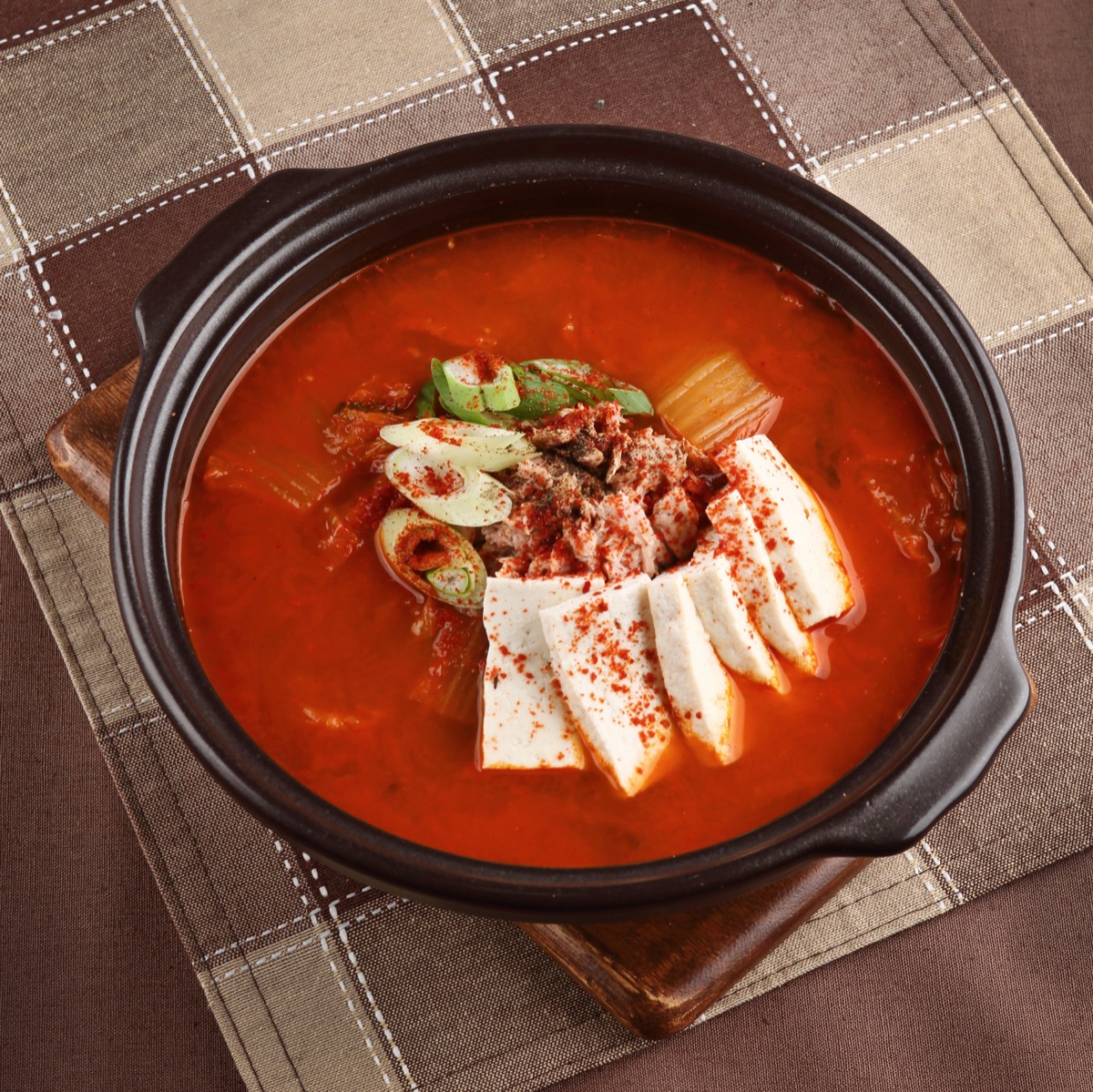
Kimchi-jjigae
A simmering stew of aged kimchi, pork, and tofu — one of the most ordered everyday meals in Korea.
Eat it the right way
Curated for this dish
Ergonomic Korean stainless chopsticks
Built for beginners — grip 된장국 and every Korean dish with confidence. 36,000원 / $35
Comments