Fermented
Jangajji
Soy-Pickled Vegetables
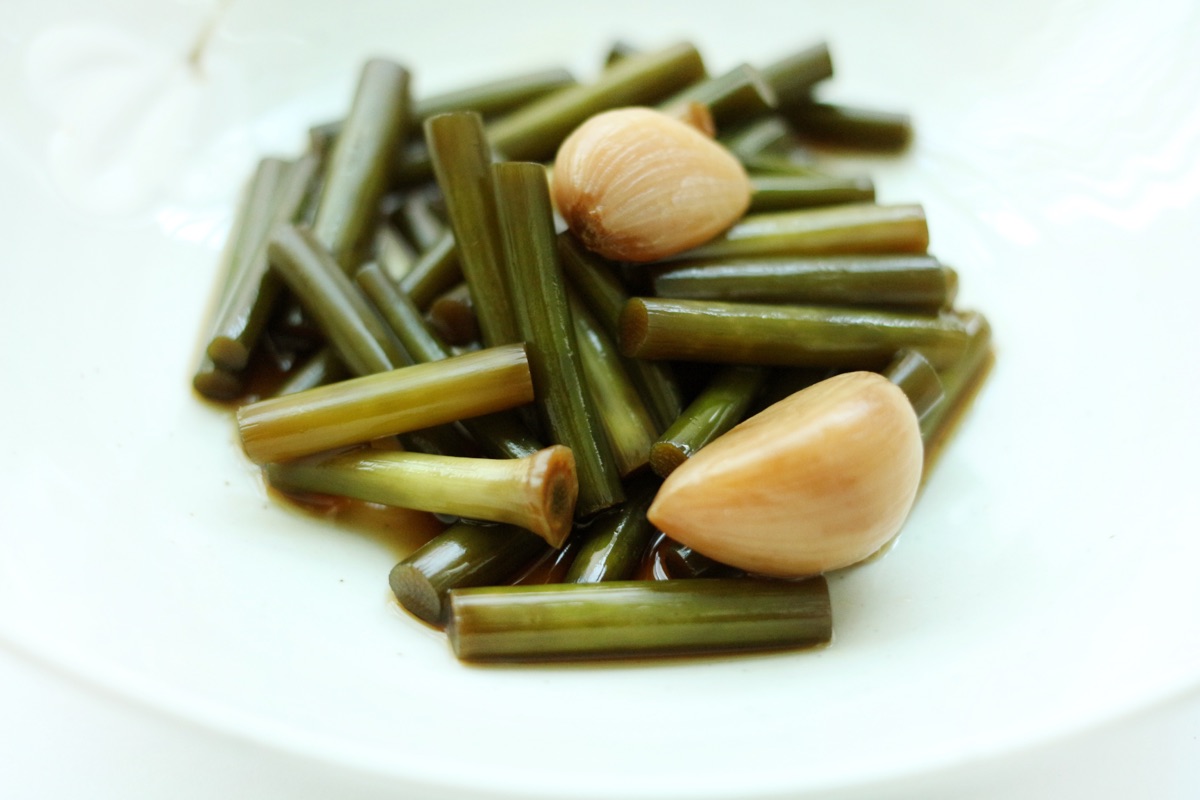
Vegetables pickled in soy sauce, vinegar, or soybean paste — salty, tangy preserves that sharpen any meal.
Jangajji is the broad family of Korean pickles: vegetables — perilla leaves, garlic, chili, cucumber, radish, and more — preserved in soy sauce, vinegar, or fermented pastes until intensely savory and tangy. Born of the need to store the harvest through long winters, it remains a thrifty, ever-present banchan that adds a salty, palate-sharpening accent to rice and richer dishes. Each region and household has signature versions, and a jar of jangajji maturing in the kitchen is a familiar sight. The flavor is concentrated, so it's eaten in small amounts as a counterpoint rather than on its own. It offers a glimpse into Korea's deep tradition of preservation beyond kimchi.
✦ Tastypinch tip
Soy-pickled leaves stick together in a slick stack — peel one off the top edge with your chopstick tips.
How to eat it
- Take a small piece as banchan with a mouthful of rice.
- Use it to cut through fatty or rich dishes.
- A little goes a long way — it's salty and concentrated.
Common mistakes
- Don't eat a big portion alone; it's a salty accent, not a main vegetable.
- Recipes vary — some use fish sauce, so ask if strict vegetarian.
Where to try it
- Banchan at home-style restaurants
- Traditional markets and temple-food restaurants
Comments