Fermented
Kimchi
Fermented Napa Cabbage
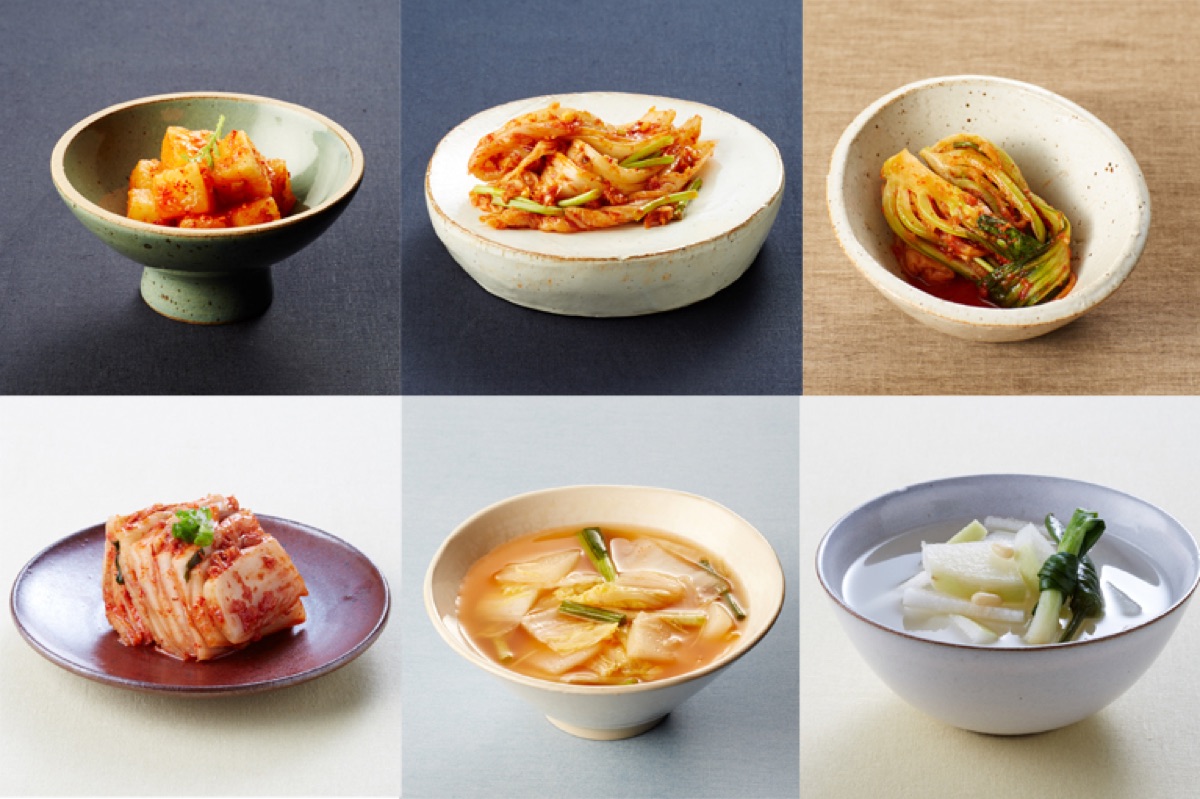
Napa cabbage fermented with chili, garlic, and salted seafood — the iconic, ever-present Korean side dish.
Kimchi is the soul of the Korean table — most commonly napa cabbage salted, coated in a paste of chili powder, garlic, ginger, and salted seafood, then fermented until it's sour, spicy, and alive with funk. It accompanies virtually every meal as banchan and is also a cooking ingredient in stews, fried rice, and pancakes. Traditionally families made huge batches together in late autumn (gimjang, a UNESCO-listed custom) to last the winter, and the practice still binds generations. There are hundreds of regional and seasonal varieties, and the flavor deepens the longer it ages. For newcomers it's pungent and assertive — but it's the single most essential taste to understand Korean food.
✦ Tastypinch tip
Grip a leaf near its firmer stem end so the soft, slippery top doesn't slide out of your chopsticks.
How to eat it
- Take small pieces as banchan with each bite of rice or grilled meat.
- Use scissors (often provided) to cut a long piece into bite size.
- Older, more sour kimchi is great cooked; fresh kimchi is crunchier and milder.
Common mistakes
- Don't assume it's vegan — most kimchi contains fish sauce or salted shrimp; ask for temple-style if needed.
- It's meant as an accompaniment, not a salad to eat by the bowlful.
Where to try it
- Free banchan at essentially every Korean meal
- Kimchi specialty shops and traditional markets for variety
You may also like
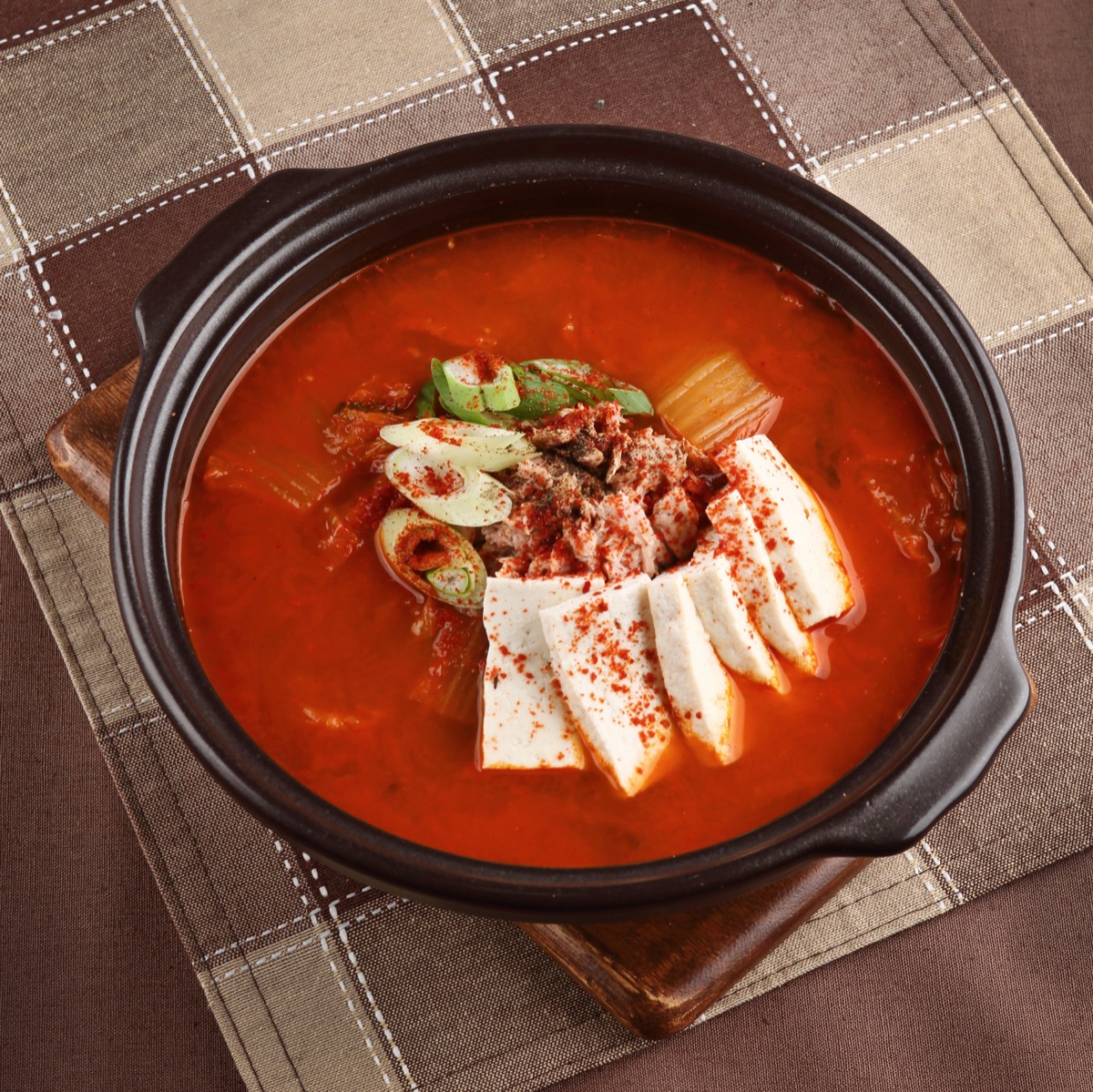
Kimchi-jjigae
A simmering stew of aged kimchi, pork, and tofu — one of the most ordered everyday meals in Korea.
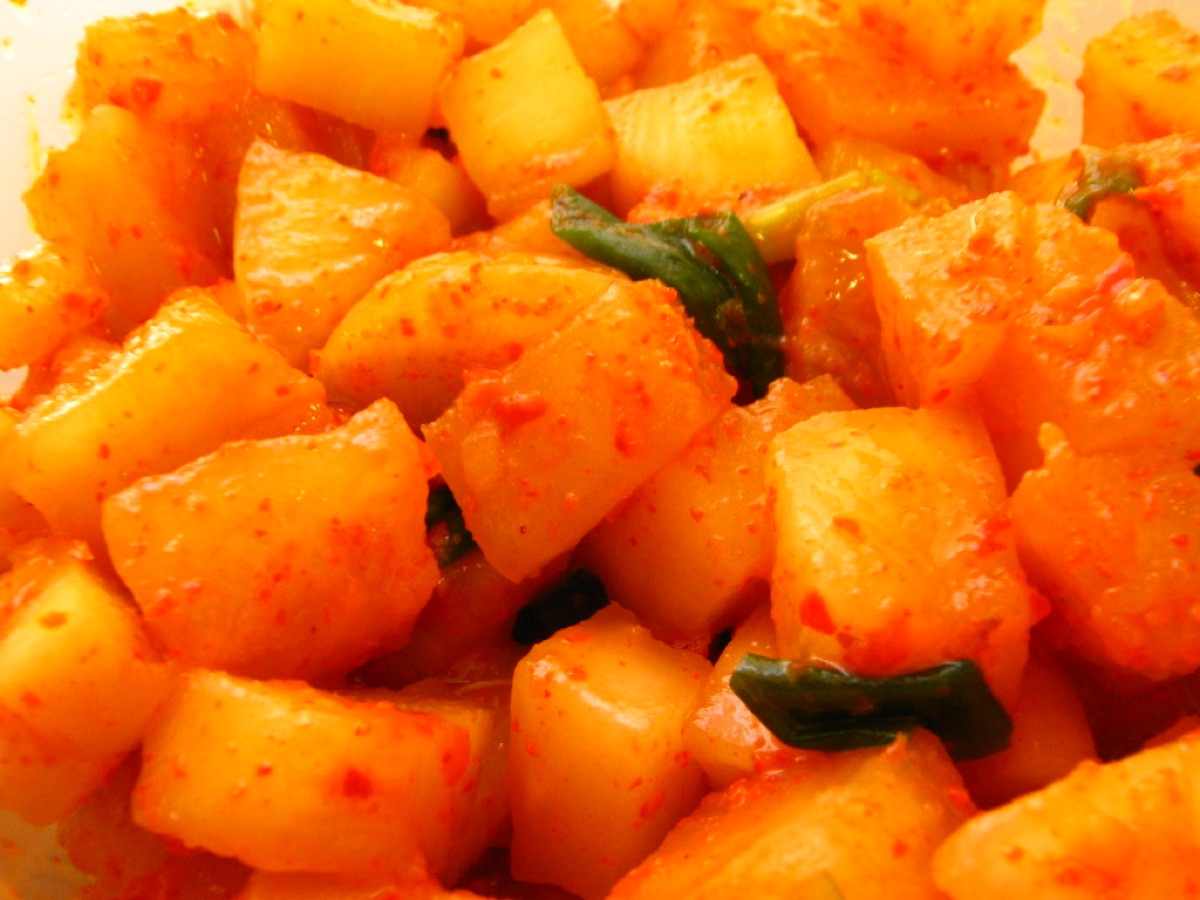
Kkakdugi
Crunchy cubed-radish kimchi — crisp, juicy, and refreshing, especially alongside soups and rice.
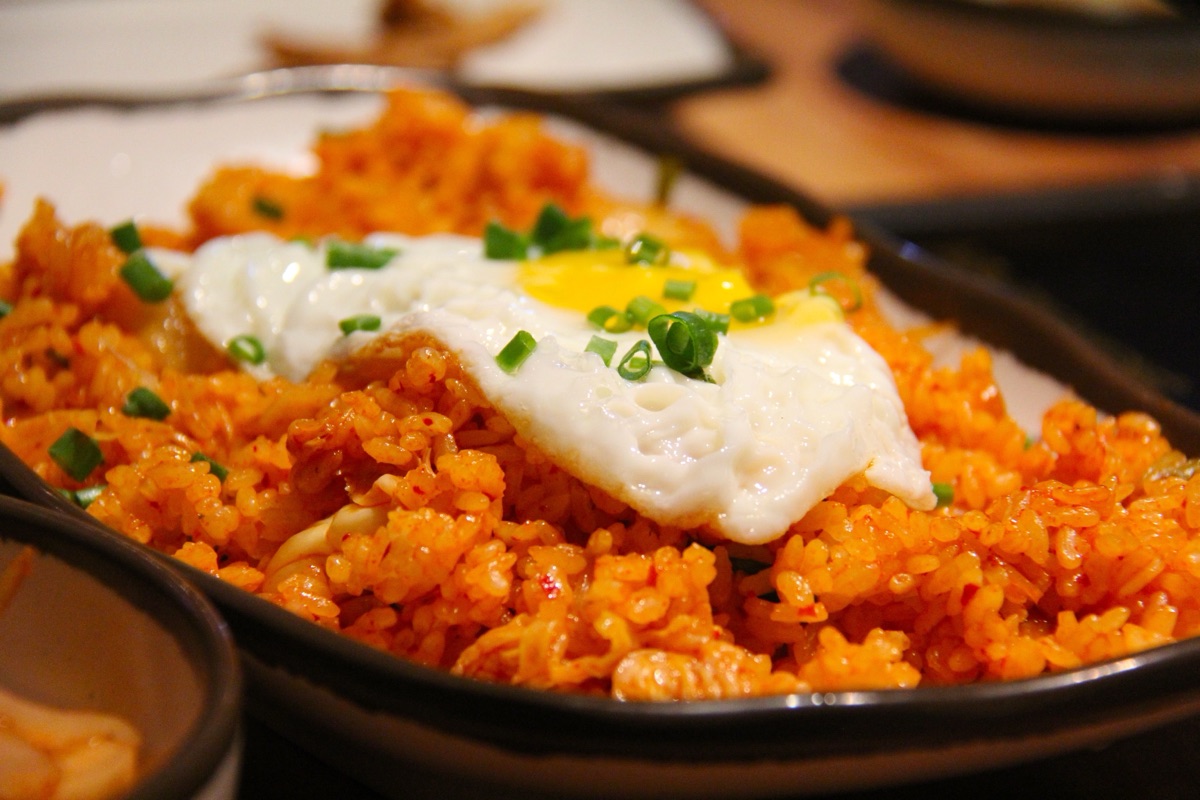
Kimchi Bokkeumbap
Aged kimchi and rice stir-fried together, usually crowned with a runny fried egg.
Eat it the right way
Curated for this dish
Ergonomic Korean stainless chopsticks
Built for beginners — grip 김치 and every Korean dish with confidence. 36,000원 / $35
Comments