Soup & stew
Aehobak-doenjang-jjigae
Korean Zucchini Doenjang Stew
A classic doenjang stew in which young Korean zucchini (aehobak) is the star vegetable, adding subtle sweetness to the fermented broth.
Aehobak-doenjang-jjigae highlights the small, pale green Korean summer zucchini (aehobak) — a vegetable that appears abundantly from late spring through autumn and forms the backbone of countless Korean summer dishes. Cut into half-moons and simmered in doenjang broth alongside tofu, mushrooms, and dried shrimp or anchovy for depth, aehobak softens and sweetens in about ten minutes, its flesh becoming silky and yielding while its skin retains a slight chew. The resulting stew has a quieter, more summery character than the full doenjang-jjigae experience: the aehobak's vegetable sweetness moderates the fermented paste's depth, making it a lighter, more refreshing stew that pairs particularly well with cold rice on hot summer afternoons. Korean home cooks prize aehobak as a forgiving, quick-cooking vegetable that elevates whatever broth surrounds it without competing with other ingredients, and its appearance in jjigae, namul, jorim, and pancake recipes alike speaks to its versatility. Street markets in Korea overflow with aehobak in summer, sold young and small for the best flavour.
How to eat it
- Eat the zucchini pieces with a spoon — they are soft and absorb broth readily.
- Mix with rice and enjoy as a light, complete summer meal.
Where to try it
- Home-style Korean restaurants
- Summer menus at traditional Korean restaurants
You may also like
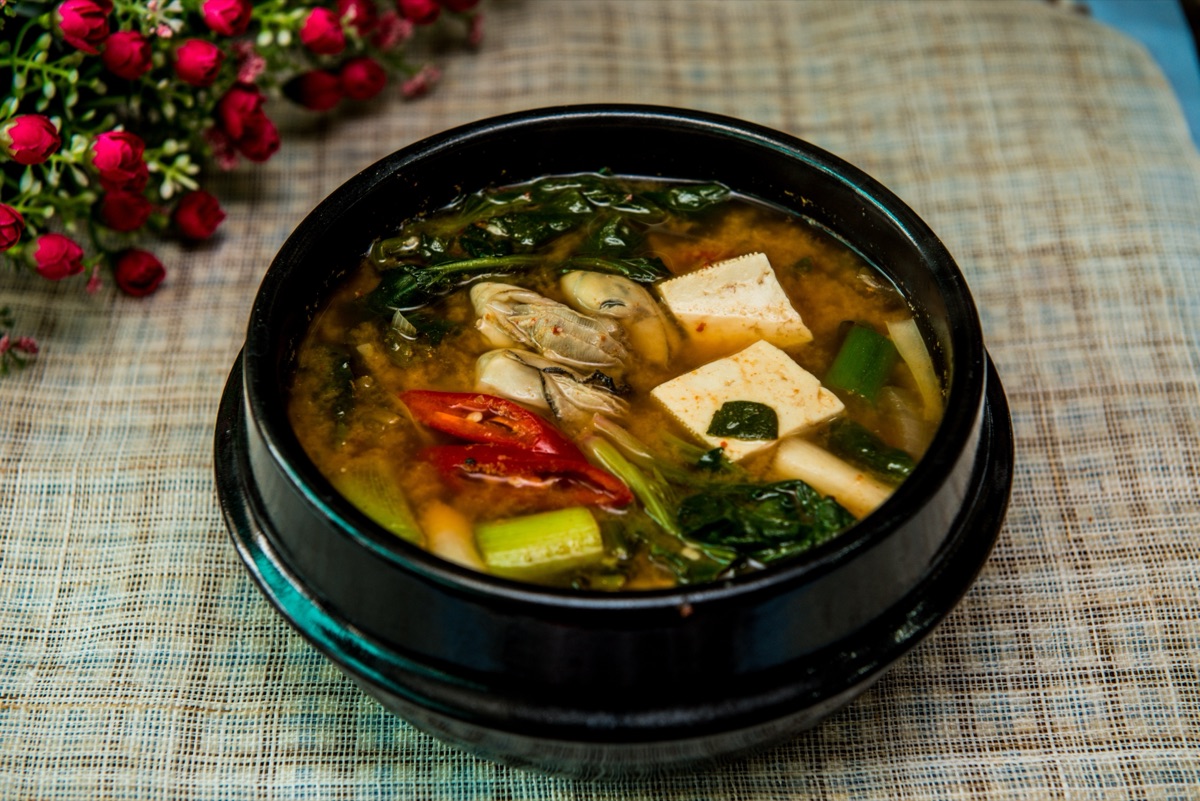
Doenjang-jjigae
An earthy stew of fermented soybean paste with tofu and vegetables — the savory backbone of the Korean table.
Doenjang-guk
A lighter, everyday version of soybean paste soup served daily in Korean homes, simpler and thinner than jjigae.
Dubu-jjigae
A straightforward, everyday stew featuring firm tofu cubes, kimchi or gochugaru broth, and pork or anchovy flavouring.
Eat it the right way
Curated for this dish
Ergonomic Korean stainless chopsticks
Built for beginners — grip 애호박된장찌개 and every Korean dish with confidence. 36,000원 / $35
Comments