Noodle
Doenjang-kalguksu
Fermented Soybean Paste Knife Noodles
Knife-cut wheat noodles simmered in a rich, earthy doenjang broth with vegetables — a deeply savory Korean comfort bowl.
Doenjang-kalguksu elevates the already-comforting kalguksu into something earthier and more complex by incorporating doenjang, Korea's fermented soybean paste, directly into the broth. The fermentation brings a deep, funky umami that is entirely its own — neither the lightness of anchovy broth nor the heaviness of meat stock, but something aged and contemplative in between. Clams are often added, their brininess cutting through the doenjang's richness and creating a layered savory depth that keeps the bowl from feeling too heavy. Zucchini, mushrooms, and green onions are standard vegetables, soaking up the broth as they cook alongside the thick, hand-cut noodles. The dish is particularly popular in the colder months, when its warming, deeply savory character makes it feel medicinal — Koreans speak of doenjang-based dishes as being good for the gut and blood, reflecting centuries of folk nutritional wisdom. It is the noodle dish most likely to be eaten at a quiet mountain restaurant after a morning hike.
✦ Tastypinch tip
Use a spoon to steady floating noodles in the broth while you grip with chopsticks.
How to eat it
- Let the broth cool slightly if served in a clay pot — it retains heat intensely.
- Eat noodles and vegetables together to balance the rich broth.
- Add a side of kimchi to contrast the earthy, savory flavors.
Common mistakes
- Expecting a mild flavor — doenjang broth is bold and assertively fermented.
Where to try it
- Mountain-area Korean restaurants (Bukhansan, Seoraksan trailheads)
- Traditional home-style restaurants
You may also like
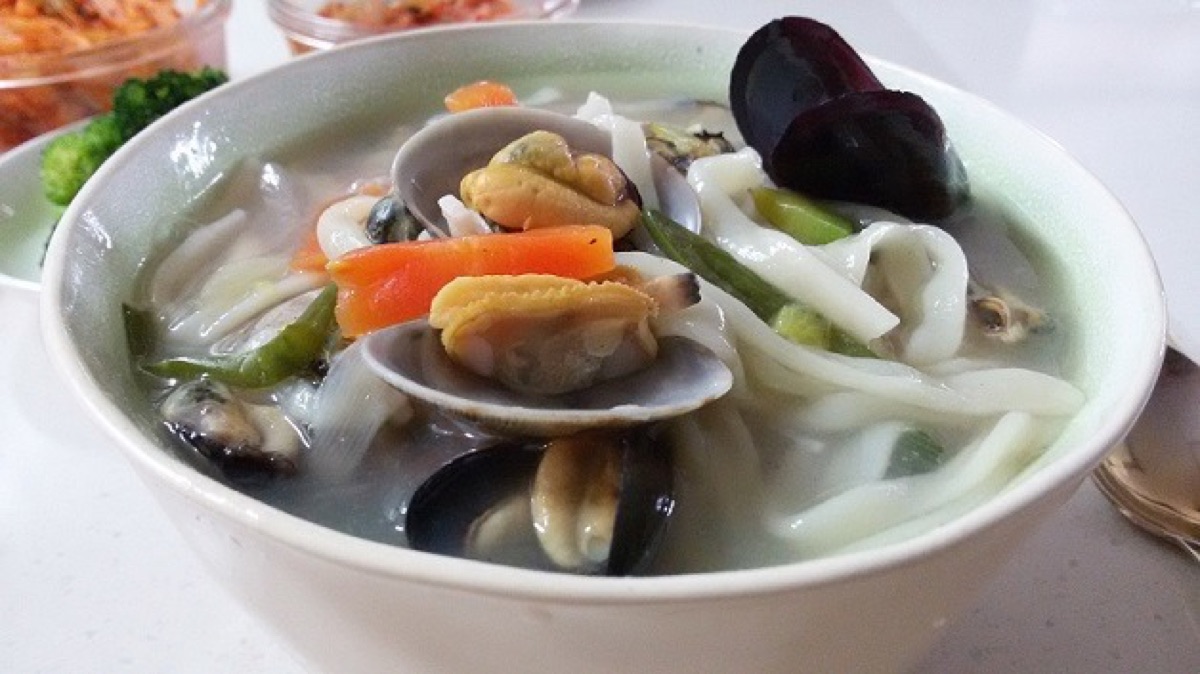
Kalguksu
Hand-cut wheat noodles in a warm, soothing broth — a homey comfort bowl, especially on rainy days.
Sujebi
Rustic soup of irregularly torn wheat dough pieces simmered in an anchovy-kelp broth with vegetables.
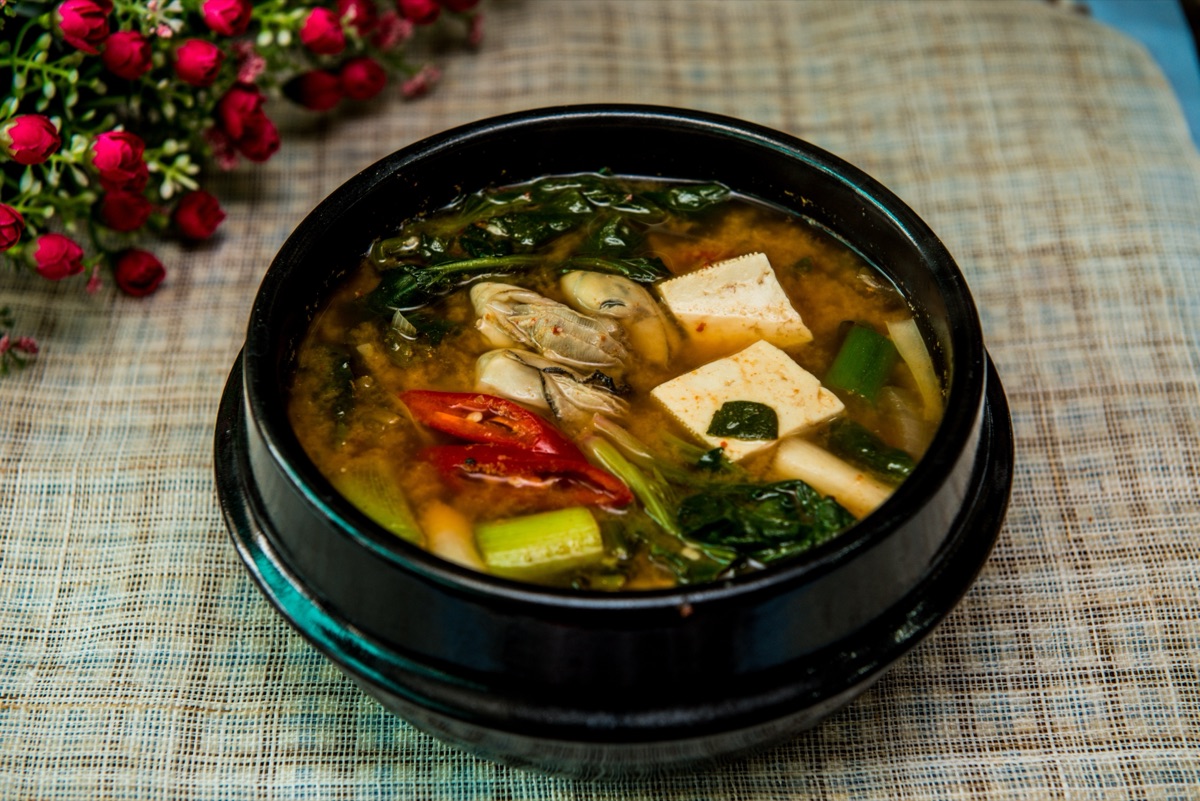
Doenjang-jjigae
An earthy stew of fermented soybean paste with tofu and vegetables — the savory backbone of the Korean table.
Eat it the right way
Curated for this dish
Ergonomic Korean stainless chopsticks
Built for beginners — grip 된장칼국수 and every Korean dish with confidence. 36,000원 / $35
Comments