Noodle
Doenjang-sujebi
Fermented Soybean Paste Torn Dough Soup
Hand-torn dough pieces simmered in a rich doenjang broth with clams and vegetables — a deeply savory mountain comfort dish.
Doenjang-sujebi combines the rustic, uneven charm of hand-torn dough with the aged, funky depth of doenjang in a way that produces one of Korean food's most quietly satisfying bowls. The fermented soybean paste dissolves into the broth during simmering and creates a miso-like earthiness that is entirely its own — more complex than miso, more rustic than a clear broth, with a salt and umami that evolves as the dough pieces absorb it over cooking. Clams are an almost essential addition, their mineral sweetness cutting through the doenjang's heaviness and lightening the overall impression dramatically. The irregularly shaped dough pieces — some thin and silky, others thick and chewy — mean every spoonful is different from the last. The dish is closely associated with outdoor eating in nature: Korean hikers traditionally end long mountain walks at a mountain village restaurant (sanhaejip) with a bowl of doenjang-sujebi cooked over a wood fire, where the smoke adds another layer of complexity to the already rich, fermented broth.
✦ Tastypinch tip
Torn dough pieces are irregular and float unpredictably — use a spoon to guide them onto chopsticks.
How to eat it
- Stir the broth gently before eating to distribute the doenjang evenly.
- Eat with the provided kimchi — its acidity perfectly balances the rich, savory broth.
- Let the pot cool slightly before eating directly from it.
Common mistakes
- Over-seasoning — doenjang broth is already quite salty and adding extra soy sauce is usually unnecessary.
Where to try it
- Mountain village restaurants at hiking trail ends
- Traditional home-style Korean restaurants
You may also like
Sujebi
Rustic soup of irregularly torn wheat dough pieces simmered in an anchovy-kelp broth with vegetables.
Doenjang-kalguksu
Knife-cut wheat noodles simmered in a rich, earthy doenjang broth with vegetables — a deeply savory Korean comfort bowl.
Doenjang-jjigae
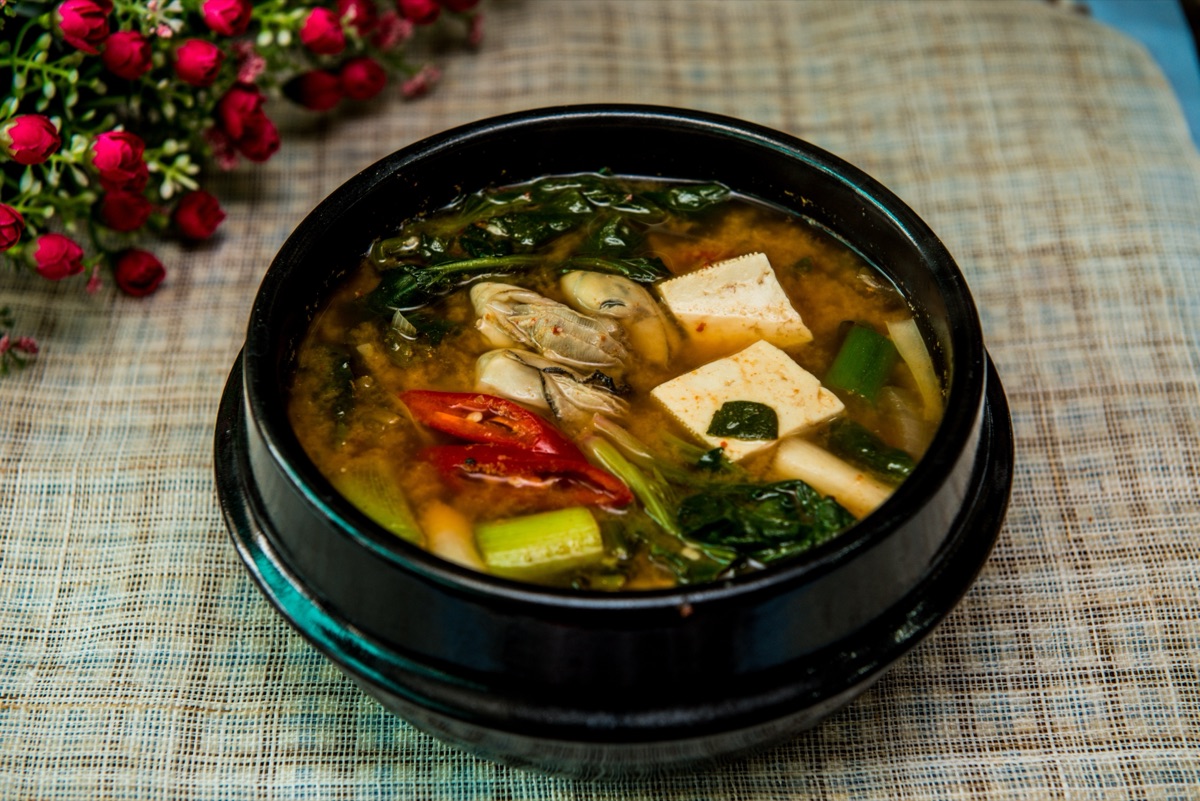
An earthy stew of fermented soybean paste with tofu and vegetables — the savory backbone of the Korean table.
Eat it the right way
Curated for this dish
Ergonomic Korean stainless chopsticks
Built for beginners — grip 된장수제비 and every Korean dish with confidence. 36,000원 / $35
Comments