Soup & stew
Gamjatang
Pork Neck Bone and Potato Stew

A hearty, peppery stew of pork neck bones and potatoes slow-cooked in a deeply seasoned gochugaru broth.
Gamjatang is a working-class staple with a flavour profile that punches far above its humble ingredients — pork neck bones, potatoes, dried perilla leaves, and a bold spice paste create a broth of remarkable complexity. The name is slightly misleading: 'gamja' means potato, but some food historians argue it originally referred to the gam-ja, a colloquial term for the pork spinal cord found in neck bones. Whatever its etymology, the dish became synonymous with late-night dining culture, particularly around Seoul's wholesale markets and construction sites, where workers needed cheap, filling, and warming food after long shifts. The potatoes are cooked until they have absorbed the spiced, pork-rich broth and sit on the edge of falling apart, and the meat clinging to the neck vertebrae is so tender it slides off with minimal encouragement. Many restaurants serve gamjatang as a communal pot in the middle of the table, making it a sociable, hands-on meal. It is also a classic anju — food eaten alongside soju — especially during cold months.
✦ Tastypinch tip
Hold the bone with one hand (using a provided cloth or the bowl edge) and pick the meat with chopsticks.
How to eat it
- Use chopsticks to pull meat from the neck bones — look for the pockets of tender meat between the vertebrae.
- Lift potatoes carefully as they are very soft and may break.
- Ladle the broth over rice in your bowl.
- Order extra rice to finish the remaining broth at the end.
Common mistakes
- Trying to eat neck bones like ribs — the meat is in small pockets and requires picking.
Where to try it
- Jongno gamjatang restaurants, Seoul
- Mapo-gu late-night eateries
You may also like
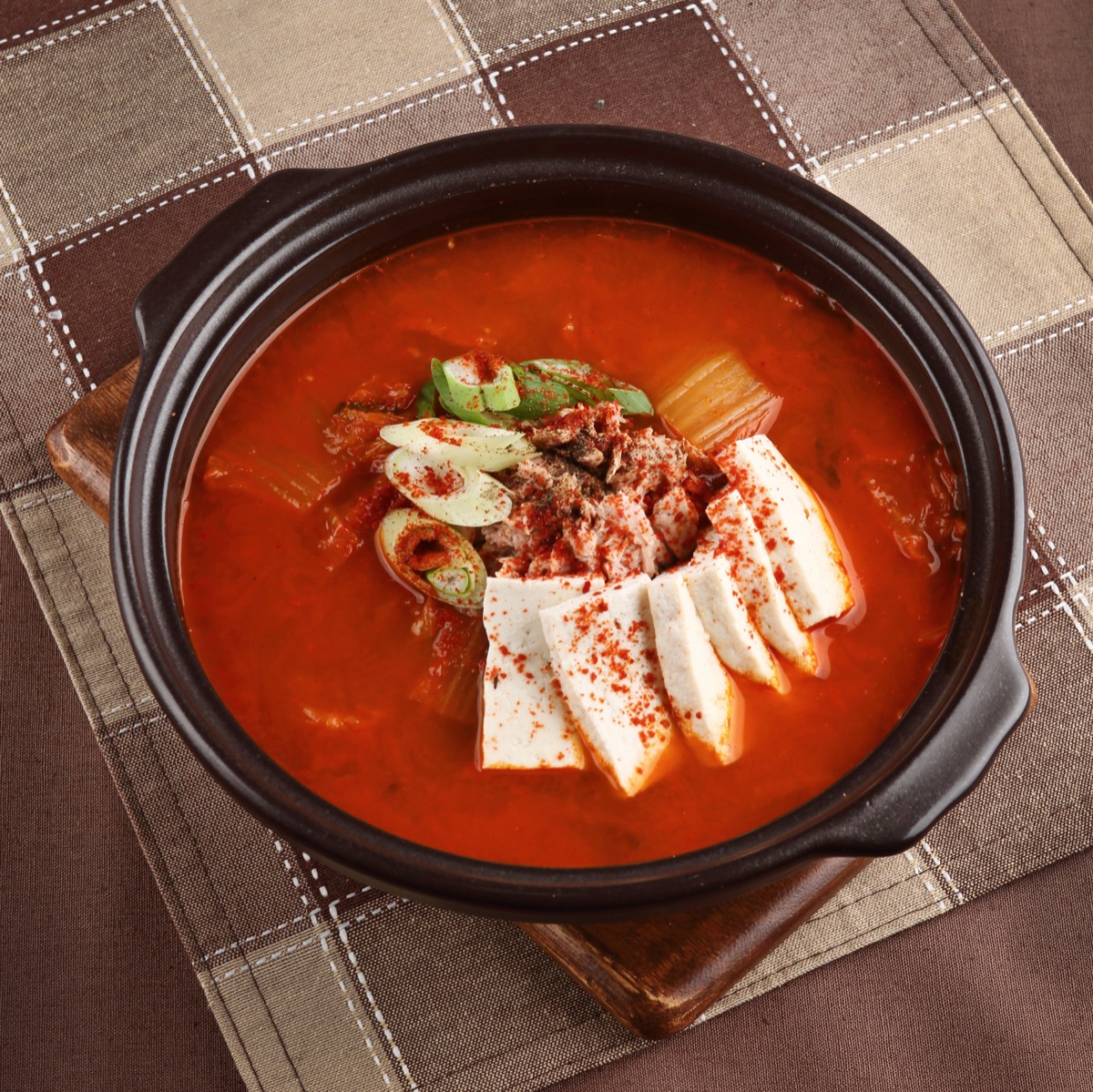
Kimchi-jjigae
A simmering stew of aged kimchi, pork, and tofu — one of the most ordered everyday meals in Korea.

Yukgaejang
A fiery, rust-red soup packed with shredded beef, fernbrake fern, and spring onions in a gochugaru-laden broth.

Galbitang
A clear, delicate broth slow-simmered with tender beef short ribs, prized for its clean depth of flavour.
Eat it the right way
Curated for this dish
Ergonomic Korean stainless chopsticks
Built for beginners — grip 감자탕 and every Korean dish with confidence. 36,000원 / $35
Comments