Rice
Gimbap
Seaweed Rice Rolls
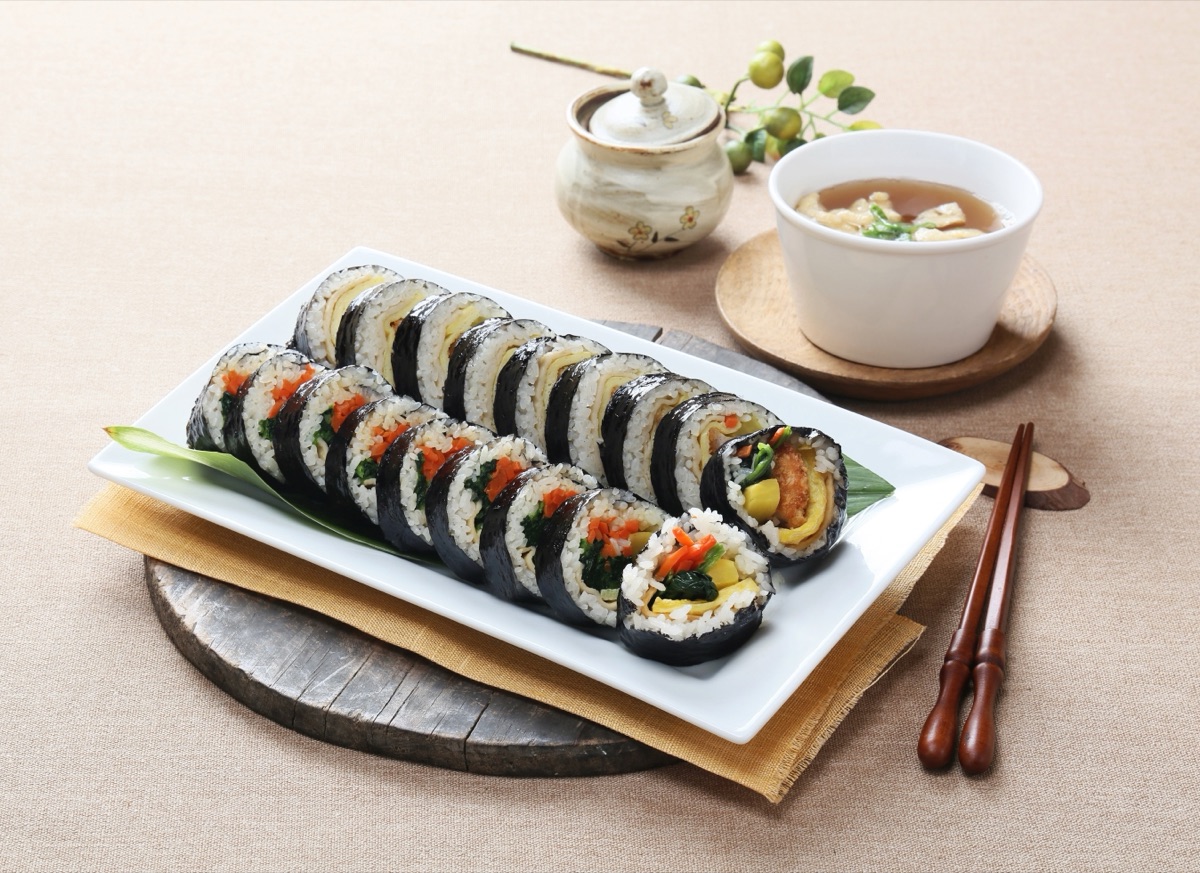
Rice and fillings rolled in seaweed and sliced into bite-size rounds — Korea's everyday portable meal.
Gimbap is the lunchbox of Korean life: rice seasoned with sesame oil and salt, rolled in dried seaweed (gim) around strips of egg, pickled radish, carrot, spinach, and often ham or tuna, then sliced into coins. It's what families pack for picnics, school field trips, and hiking trips, and what students grab before an exam. Cheap gimbap shops (김밥천국 and the like) sell it all day, making it one of the most accessible meals for a traveler on the move. Though it resembles Japanese maki, it's seasoned with sesame rather than vinegar and is meant to be eaten plain, without soy sauce. Each shop has its own fillings, and modern versions run from cheese to bulgogi.
✦ Tastypinch tip
Pinch a round gently across its width, not from the top — squeezing too hard pops the filling out the side.
How to eat it
- Eat each slice whole, in one bite if it fits.
- It's portable and meant to be eaten with your hands or chopsticks, anywhere.
- Pickled radish on the side resets your palate between pieces.
Common mistakes
- Don't dip it in soy sauce; gimbap is already seasoned, unlike Japanese sushi.
- Ask about fillings if you avoid ham, fish cake, or tuna — they vary by shop.
Where to try it
- Gimbap chains and corner snack shops (분식집) everywhere
- Convenience stores for a quick grab
- Markets and trailheads for picnic packs
Comments