Noodle
Japchae
Stir-Fried Glass Noodles
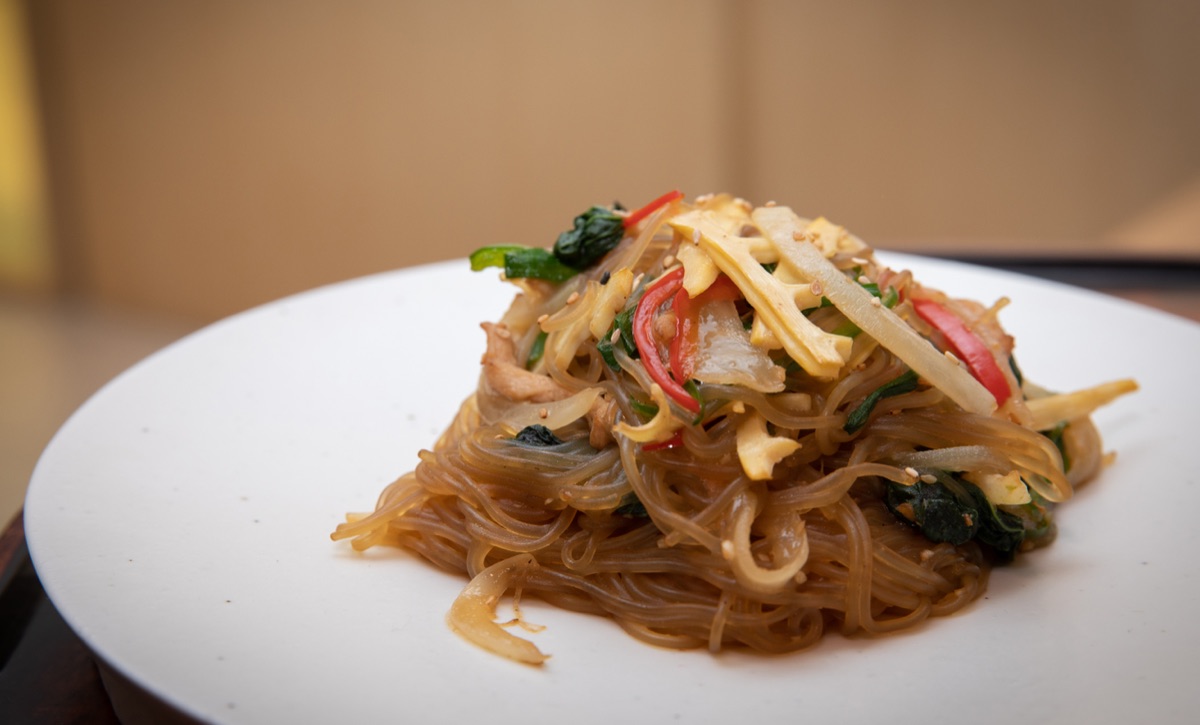
Glassy sweet-potato noodles stir-fried with vegetables and beef, served warm or at room temperature.
Japchae is the dish that signals a celebration: birthdays, holidays, weddings, and ancestral rites almost always have a platter of it. The noodles are dangmyeon, made from sweet potato starch, which stay springy and translucent and carry a sweet-savory glaze of soy sauce and sesame oil. Each vegetable — spinach, carrot, onion, mushroom — is ideally cooked separately so its color and texture stay distinct, which is why a good japchae looks like confetti. Historically it was a royal-court dish made without noodles at all; the glass noodles were added in the 20th century. It's mild, a little sweet, and one of the most universally liked Korean dishes, even among children.
✦ Tastypinch tip
Twist the noodles once around your chopsticks like spaghetti — Tastypinch's grip surface stops them from sliding off.
How to eat it
- Pick up a small bundle of noodles with vegetables together — don't isolate the noodles.
- Eat as a side dish or main; pairs well with plain rice.
- Best at room temperature, so don't worry if it's not piping hot.
Common mistakes
- Don't slurp loudly — japchae is not a soup noodle.
- Don't expect heat; this is a sweet-savory dish, not a spicy one.
Where to try it
- Korean banquet and celebration tables (잔칫상)
- Home-style restaurants as a shared dish
- Banchan shops and grocery deli counters
You may also like
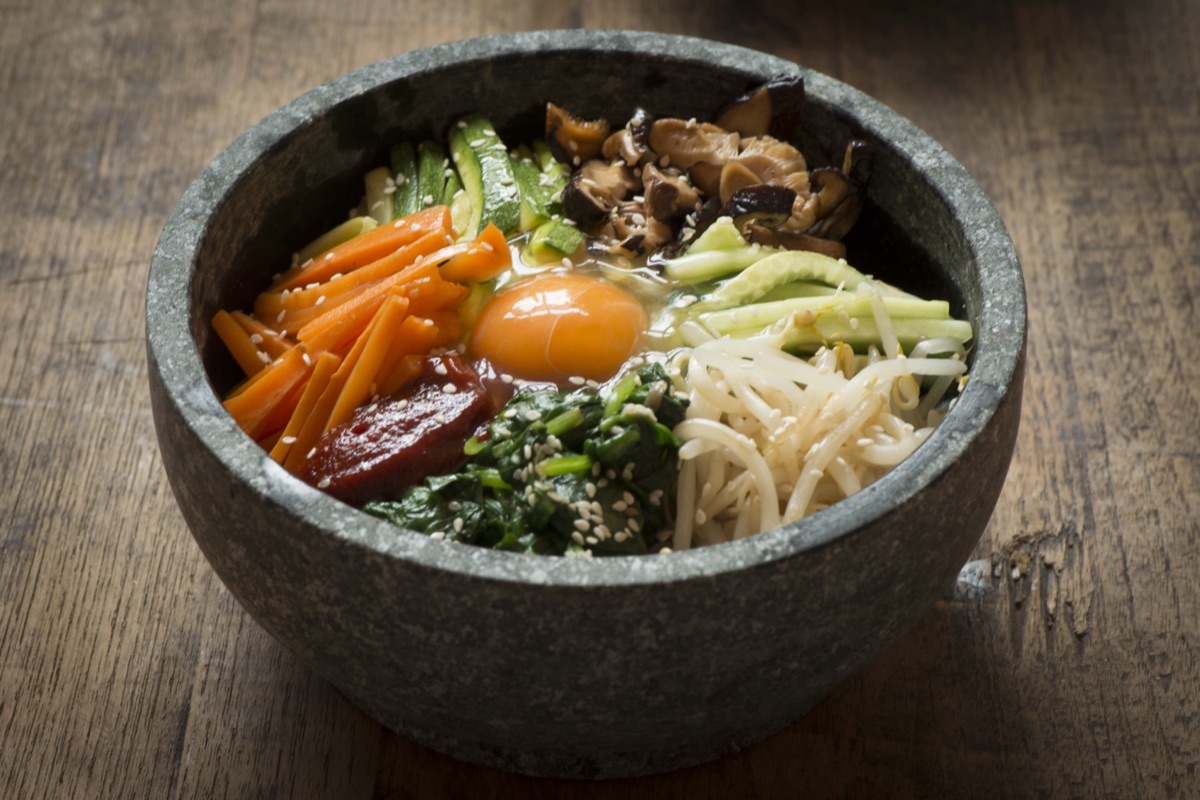
Bibimbap
Warm rice topped with seasoned vegetables, a fried egg, and gochujang — mixed together before the first bite.
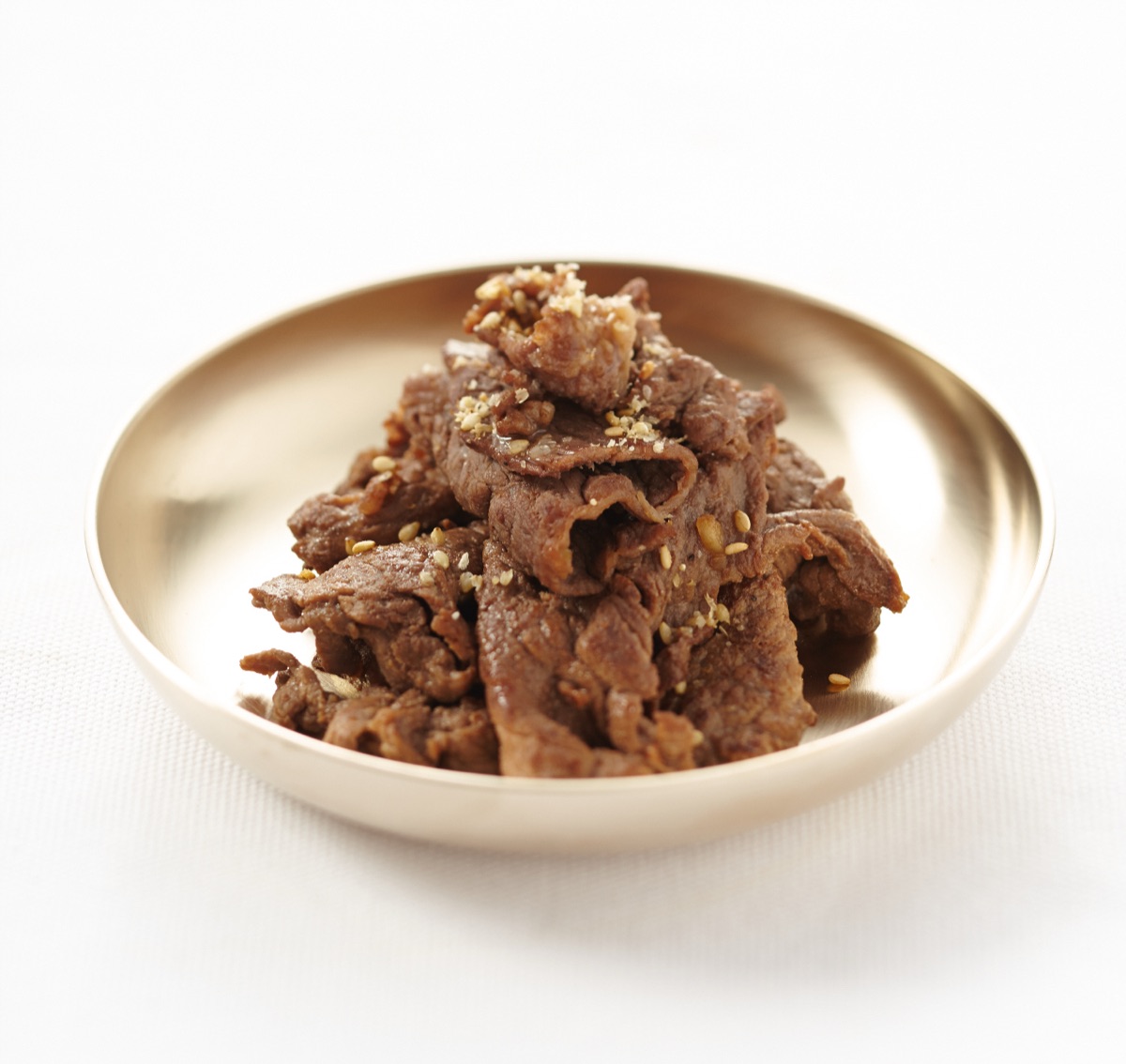
Bulgogi
Thinly sliced beef marinated in sweet soy sauce, grilled or pan-cooked — the gentle gateway to Korean meat dishes.
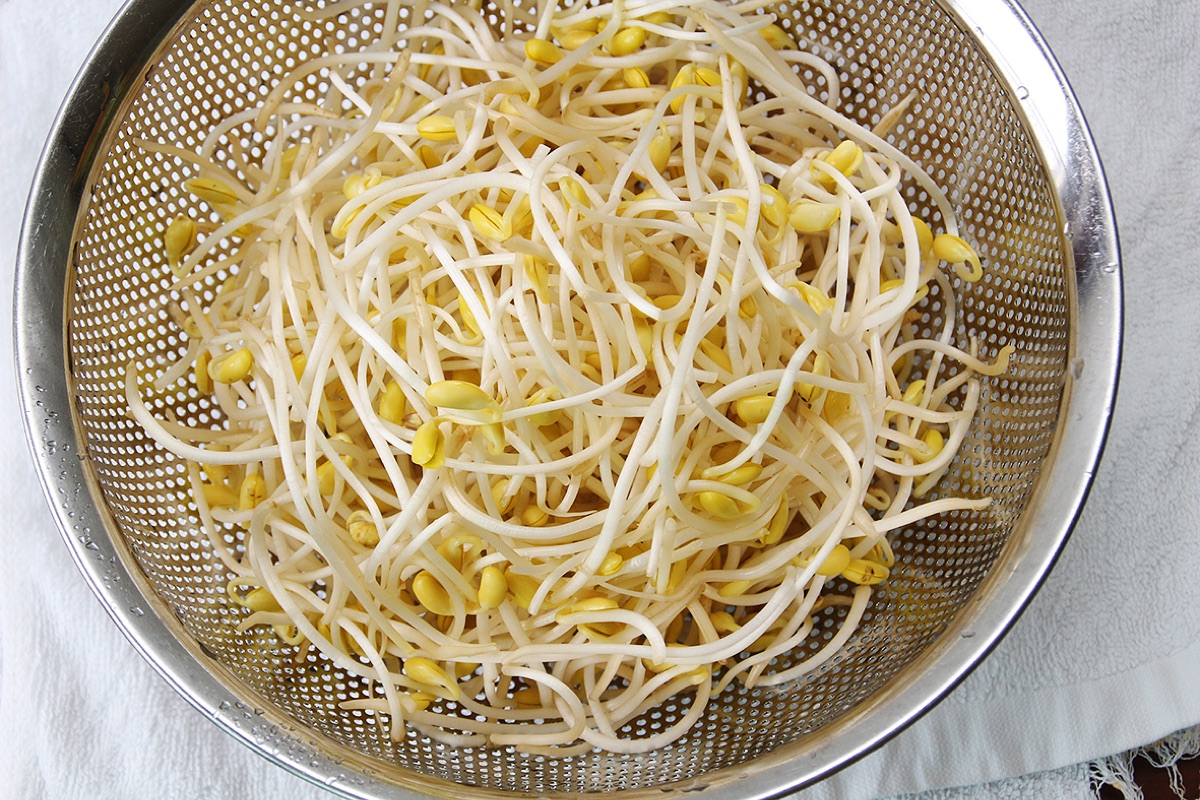
Kongnamul-muchim
Blanched soybean sprouts seasoned with sesame oil, garlic, and a touch of salt — a staple banchan on almost any Korean table.
Eat it the right way
Curated for this dish
Ergonomic Korean stainless chopsticks
Built for beginners — grip 잡채 and every Korean dish with confidence. 36,000원 / $35
Comments