Banchan
Kongbiji-jjigae-banchan
Ground Soybean Stew
Thick, porridge-like stew made from ground soybeans, kimchi, and pork.
Kongbiji-jjigae occupies a special category of Korean comfort food — hearty, creamy, and deeply nourishing — built from the ground soybean pulp (kongbiji) left over after making tofu, transforming a byproduct of frugal ingenuity into one of the most satisfying soups in the Korean home kitchen. The blended soybean paste gives the stew its characteristic milky, thick consistency that is unlike any other Korean jjigae, coating the palate with a richness that has no fat beyond whatever pork belly might be added. Kimchi and pork are the classic additions, their fermented tang and meaty depth cutting through the stew's creaminess and elevating the whole to something greater than its humble ingredients suggest. During the Korean War and the subsequent years of post-war scarcity, kongbiji-jjigae was a survival food — affordable, filling, and nutritious — and its enduring popularity reflects how Koreans have continued to embrace dishes born from necessity as expressions of culinary identity. It is eaten in winter above all, served bubbling in a ttukbaegi earthenware pot alongside rice and simple banchan.
✦ Tastypinch tip
This is a spoon dish — use the Korean spoon, not chopsticks.
How to eat it
- Scoop with a spoon and eat with rice.
- Stir before eating — the thick batter settles at the bottom.
Common mistakes
- Eating it too hot straight from the pot — the thick stew retains heat longer than it appears.
Where to try it
- Korean home-style restaurants specializing in soups (guk jip)
- Traditional market food courts
You may also like
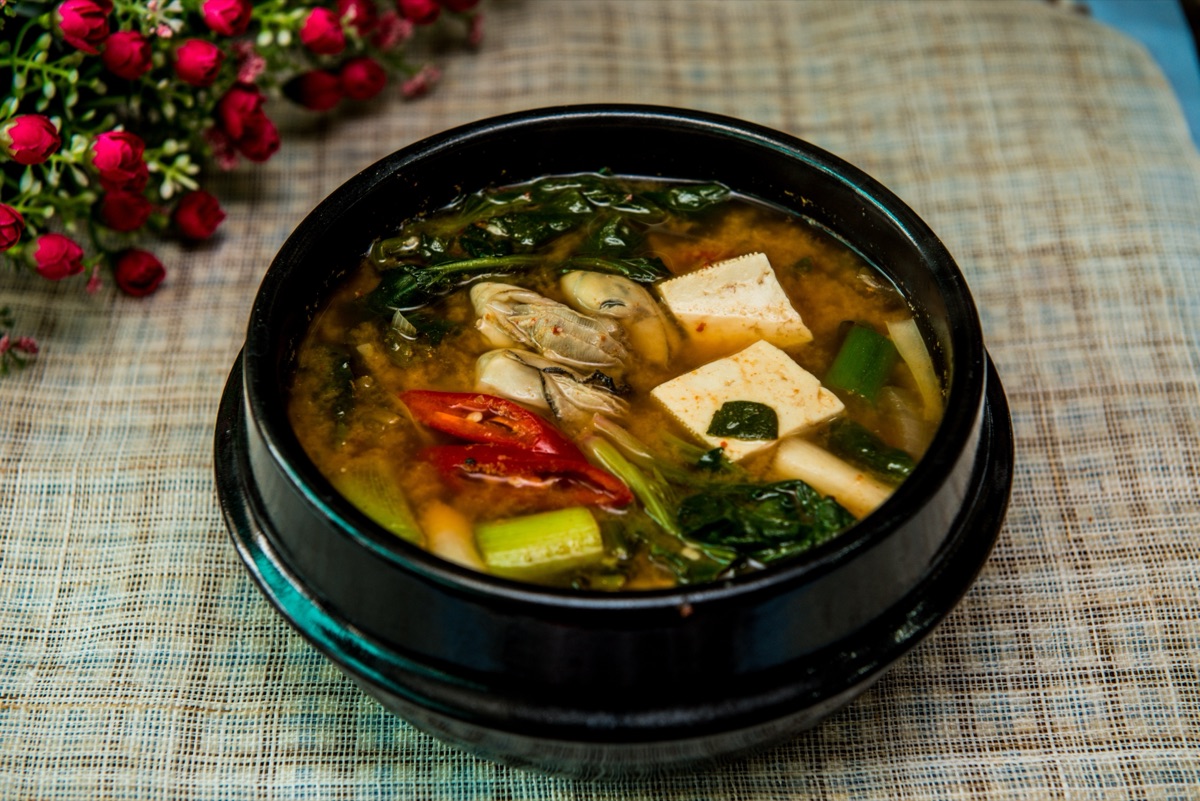
Doenjang-jjigae
An earthy stew of fermented soybean paste with tofu and vegetables — the savory backbone of the Korean table.
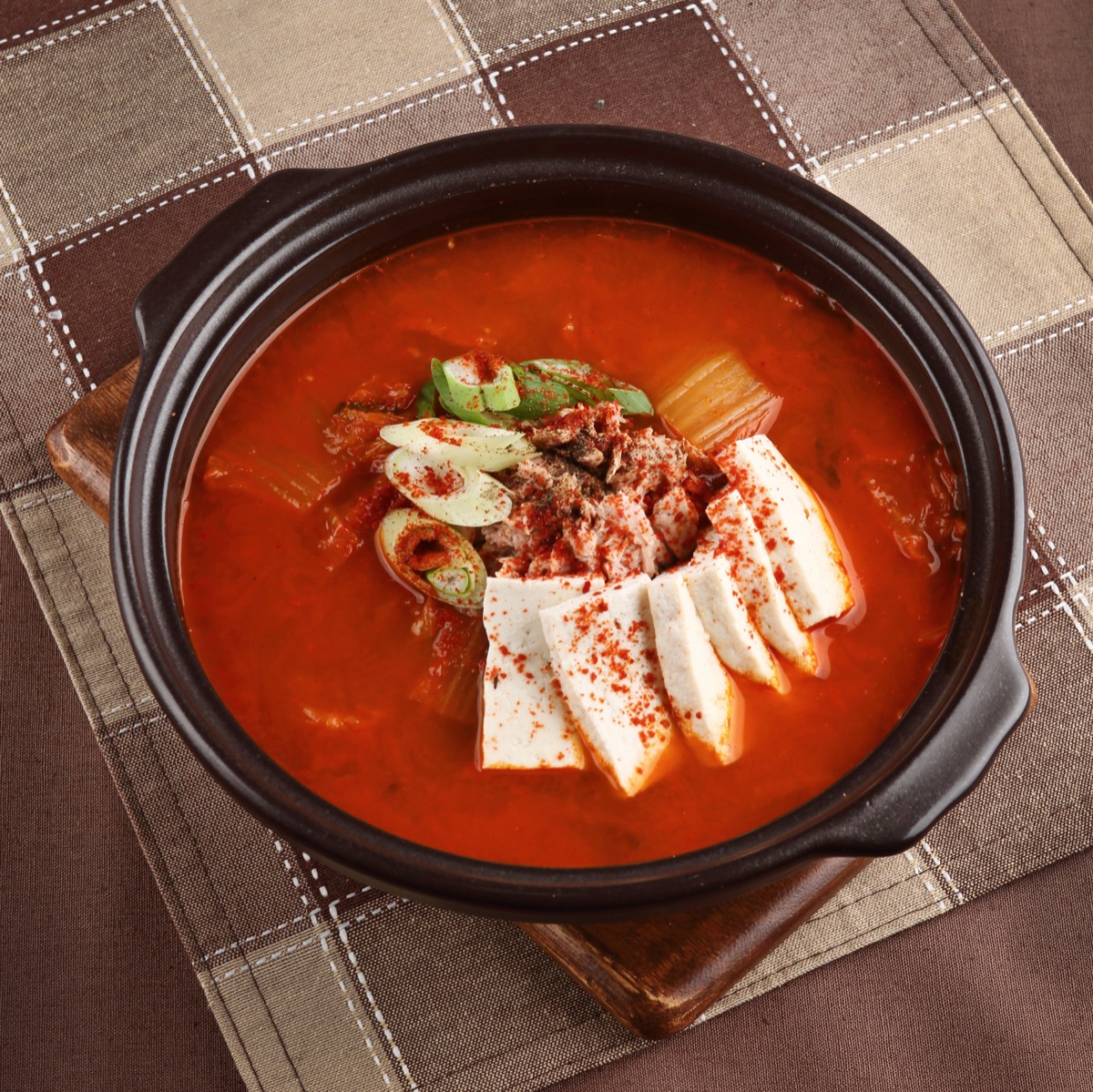
Kimchi-jjigae
A simmering stew of aged kimchi, pork, and tofu — one of the most ordered everyday meals in Korea.

Dubu-jorim
Pan-fried tofu slices braised in a bold, savory-spicy sauce with green onions.
Eat it the right way
Curated for this dish
Ergonomic Korean stainless chopsticks
Built for beginners — grip 콩비지찌개 and every Korean dish with confidence. 36,000원 / $35
Comments