Soup & stew
Manduguk
Dumpling Soup

A comforting clear broth soup filled with plump handmade dumplings, often enjoyed on cold days and festive occasions.
Manduguk occupies a warm, nostalgic place in Korean culinary memory — it is the soup grandmothers make when grandchildren visit, the dish served at Seollal alongside tteokguk, and the meal that appears in heated pojangmacha tents during winter markets. The dumplings used are typically the larger Korean mandu, filled with a mixture of minced pork or beef, tofu, glass noodles, and kimchi or napa cabbage, all wrapped in a thin flour skin that softens and turns almost translucent when boiled in the delicate beef or chicken broth. Unlike the richer Chinese wonton soup it superficially resembles, manduguk tends toward restraint — the broth is clean and lightly salted, trusting the flavour of the filling to carry the bowl. In the north of the Korean peninsula, mandu-making is considered a craft, and families gather before the New Year to fold hundreds of dumplings together in an assembly-line ritual that bonds generations. The soup can be elevated with tteok rice cakes added (tteok-mandu-guk) or kept simple with just dumplings, egg strips, and spring onion.
✦ Tastypinch tip
Pierce the dumpling slightly before picking it up so steam escapes — no exploding broth.
How to eat it
- Bite the dumpling in half carefully to avoid the hot steam and broth inside.
- Dip in soy-vinegar sauce if provided.
- Drink the clear broth between dumplings to cleanse the palate.
Common mistakes
- Biting a whole mandu in one go — the interior is scalding hot from the soup.
Where to try it
- Myeong-dong dumpling restaurants, Seoul
- Insadong traditional restaurants
You may also like

Tteokguk
A clean, clear broth soup filled with oval-sliced white rice cakes, traditionally eaten on New Year's Day.
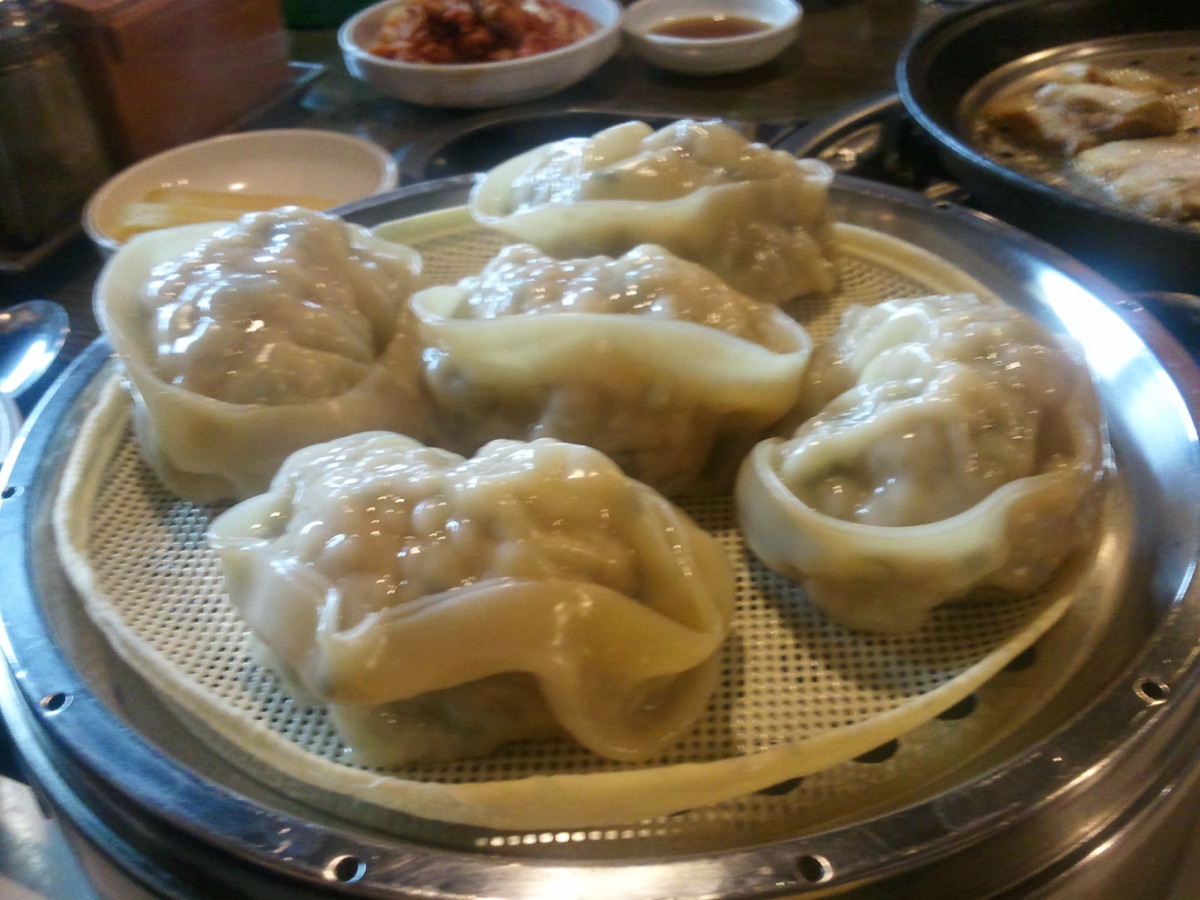
Mandu
Korean dumplings filled with pork, vegetables, or kimchi — steamed, boiled, or fried, and endlessly versatile.

Galbitang
A clear, delicate broth slow-simmered with tender beef short ribs, prized for its clean depth of flavour.
Eat it the right way
Curated for this dish
Ergonomic Korean stainless chopsticks
Built for beginners — grip 만두국 and every Korean dish with confidence. 36,000원 / $35
Comments