Snack
Tteok-Kkochi
Rice Cake Skewer
Chewy cylindrical rice cakes skewered and grilled or pan-fried, then coated in a sweet-spicy gochujang glaze.
Tteok-kkochi sits at the intersection of two beloved Korean street foods — tteokbokki and skewer culture — combining the chewy, satisfying texture of garae-tteok (cylindrical rice cakes) with the charred edges and caramelized sauce that only direct heat can produce. Where tteokbokki simmers rice cakes in a saucy broth, tteok-kkochi threads them onto skewers and grills or pan-fries them before applying a thick, glossy gochujang-based sauce that clings to the slightly browned exterior. The result is a more concentrated, smoky, and sticky flavor experience than its braised cousin. School-gate vendors (schooljangs selling snacks to students) made tteok-kkochi a childhood institution for generations of Koreans, and many adults describe it with the particular fondness reserved for foods tied to youth and freedom. Regional sauce variations exist — some areas prefer a lighter soy-garlic glaze rather than the standard spicy red coating. In recent years, upscale versions with truffle oil or cheese have appeared in trendy Seoul neighborhoods, but the three-for-a-thousand-won cart version remains the sentimental gold standard.
✦ Tastypinch tip
The skewer does the work; no chopsticks needed.
How to eat it
- Hold the skewer and bite the rice cakes off one by one.
- Chew slowly — the chewy texture is meant to be savored.
- Request less sauce if you prefer a milder heat level.
Common mistakes
- Eating too fast — the gochujang glaze is deceptively hot in temperature right off the heat.
Where to try it
- School-gate vendors near middle/high schools across Korea
- Tteokbokki specialty streets in Sindang-dong, Seoul
You may also like
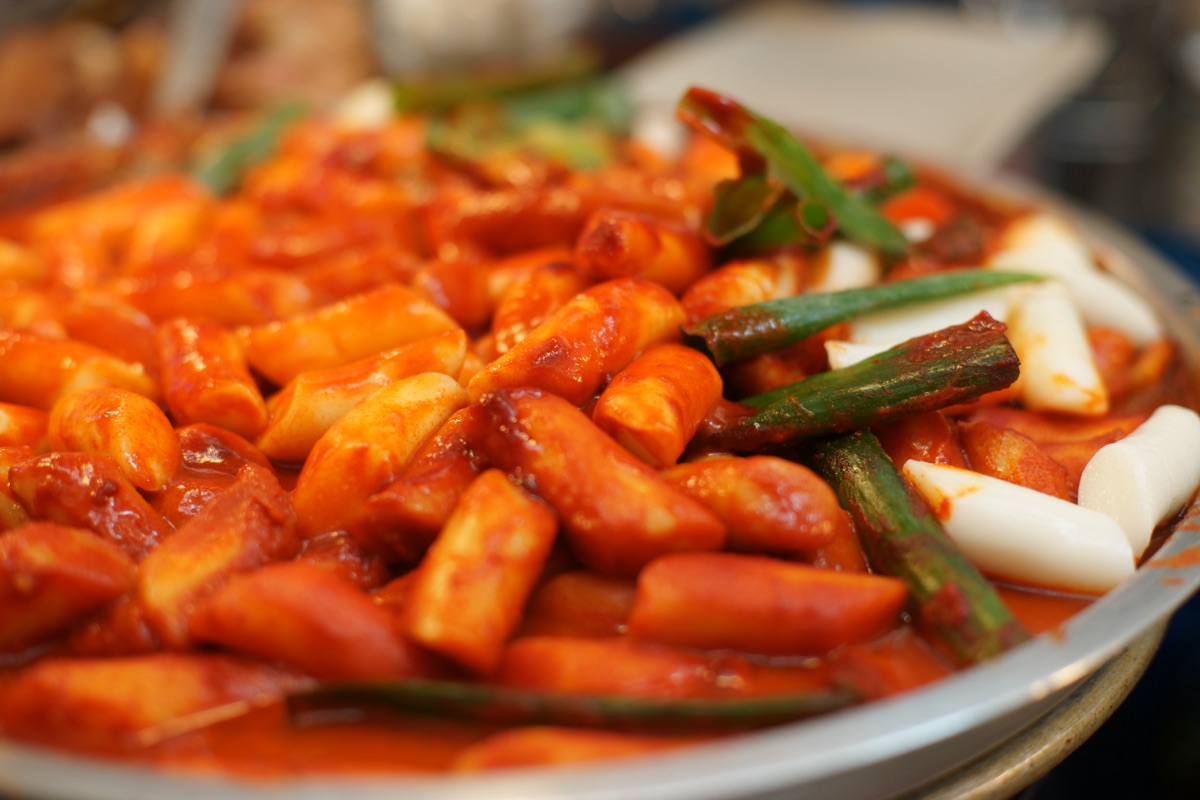
Tteokbokki
Chewy rice cakes simmered in a sweet-spicy gochujang sauce — Korea's most iconic street snack.
Eomuk
Soft fish cakes threaded on skewers and simmered in a light, savory broth — the quintessential Korean winter street food.
Twigim
An assortment of battered and deep-fried vegetables, shrimp, and dumplings served with sweet tteokbokki sauce.
Eat it the right way
Curated for this dish
Ergonomic Korean stainless chopsticks
Built for beginners — grip 떡꼬치 and every Korean dish with confidence. 36,000원 / $35
Comments