Banchan
Manul-jangajji
Soy-pickled Garlic
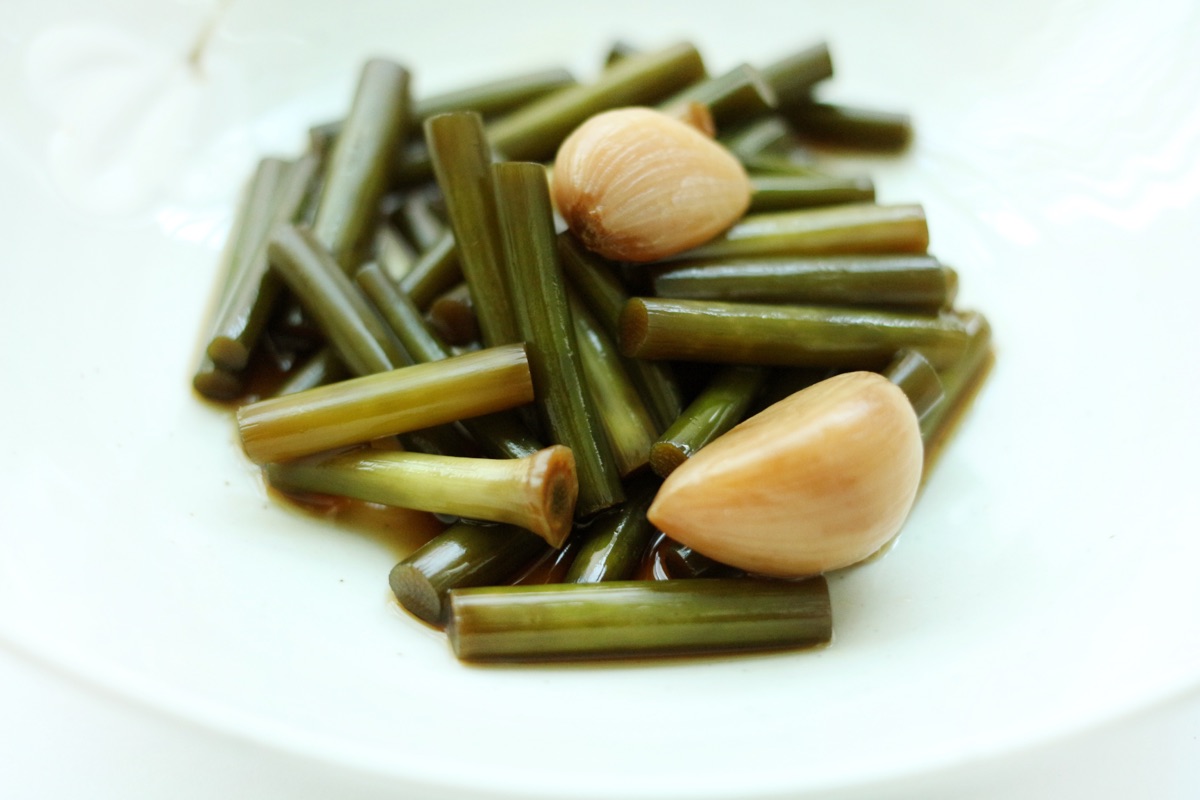
Whole garlic cloves cured in soy sauce and vinegar until tender, mellow, and deeply savory.
Manul-jangajji is one of the most polarizing and beloved preserved banchan in the Korean kitchen — whole cloves of garlic that have been pickled in a two-stage process of soy-vinegar brine and then gochujang or additional soy sauce over a period of weeks to months, until the sharp, raw pungency of fresh garlic mellows entirely into a soft, complex, almost sweet-savory depth that is one of the most addictive small bites in Korean cuisine. The first stage involves submerging peeled garlic in a vinegar-soy brine for at least two weeks to draw out the harsh allicin compounds, after which the garlic is transferred to a final seasoned soy brine or gochujang paste for longer maturation. The finished cloves are tender enough to eat whole in one bite, their centers yielding and richly flavored without any of the eye-watering sharpness of raw garlic. In Korea, garlic is revered as a health-giving food with near-mythological status — the founding myth of the nation features the tiger and bear who ate garlic to transform into humans — giving manul-jangajji a cultural significance that goes beyond its role as mere preservation.
✦ Tastypinch tip
Small garlic cloves can roll — use chopsticks to press against the dish wall before gripping.
How to eat it
- Eat one clove whole with a bite of rice.
- Slice and place on top of other banchan to add garlic depth.
Common mistakes
- Tasting too early — the garlic needs at minimum two weeks to lose its harshness.
Where to try it
- Korean traditional banchan shops (banchan-gaje)
- Korean set-meal restaurants with full spreads
You may also like
Jangajji
Vegetables pickled in soy sauce, vinegar, or soybean paste — salty, tangy preserves that sharpen any meal.
Doganji-jangajji
Crispy kohlrabi pickled in soy sauce, vinegar, and sugar for a bright, tangy banchan.
Ganjang-gejang
Raw blue crab cured in a soy-garlic brine — although technically raw, it is table-finished and classically paired with grilled dishes.
Eat it the right way
Curated for this dish
Ergonomic Korean stainless chopsticks
Built for beginners — grip 마늘장아찌 and every Korean dish with confidence. 36,000원 / $35
Comments