Soup & stew
Soondubu-jjigae
Soft Tofu Stew

A bubbling, intensely spiced stew built around silken soft tofu, clams or pork, and a vivid gochugaru broth.
Soondubu-jjigae is named for soondubu, the uncurdled, freshly pressed tofu that barely holds its shape — slippery, silken, and almost custardy in texture — which dissolves into the fiery anchovy-based broth in soft, yielding curds. The dish is believed to have been popularised in the port city of Busan, where abundant seafood made it natural to add clams, oysters, or shrimp, and it later spread across Korea in countless restaurant variations. A defining ritual is the raw egg cracked directly into the stew at the table; diners stir it in themselves or let it poach gently in the residual heat, creating a silky ribbon of cooked egg throughout the bowl. Served in a small cast-iron or earthenware pot that arrives still violently boiling, the stew demands patience — and yet the steam alone, fragrant with sesame oil and gochugaru, makes waiting almost impossible. Korean Americans took the dish to Los Angeles's Koreatown, where sundubu restaurants became an institution and introduced generations of non-Koreans to the pleasure of a crackling-hot pot. The combination of delicate tofu against the aggressive, brick-red broth is one of Korea's most beloved contrasts.
✦ Tastypinch tip
Use a spoon for the tofu — it's too soft for chopsticks and will break apart.
How to eat it
- Wait 30 seconds before eating — the pot remains dangerously hot.
- Crack the provided raw egg into the centre and stir gently.
- Spoon soft tofu curds and broth over rice, or eat side by side.
- Mix in a little kimchi for extra tang.
Common mistakes
- Touching the stone pot — it stays hot enough to burn for many minutes after serving.
Where to try it
- BCD Tofu House, Koreatown LA or Seoul branches
- Busan street-level jjigae restaurants
You may also like
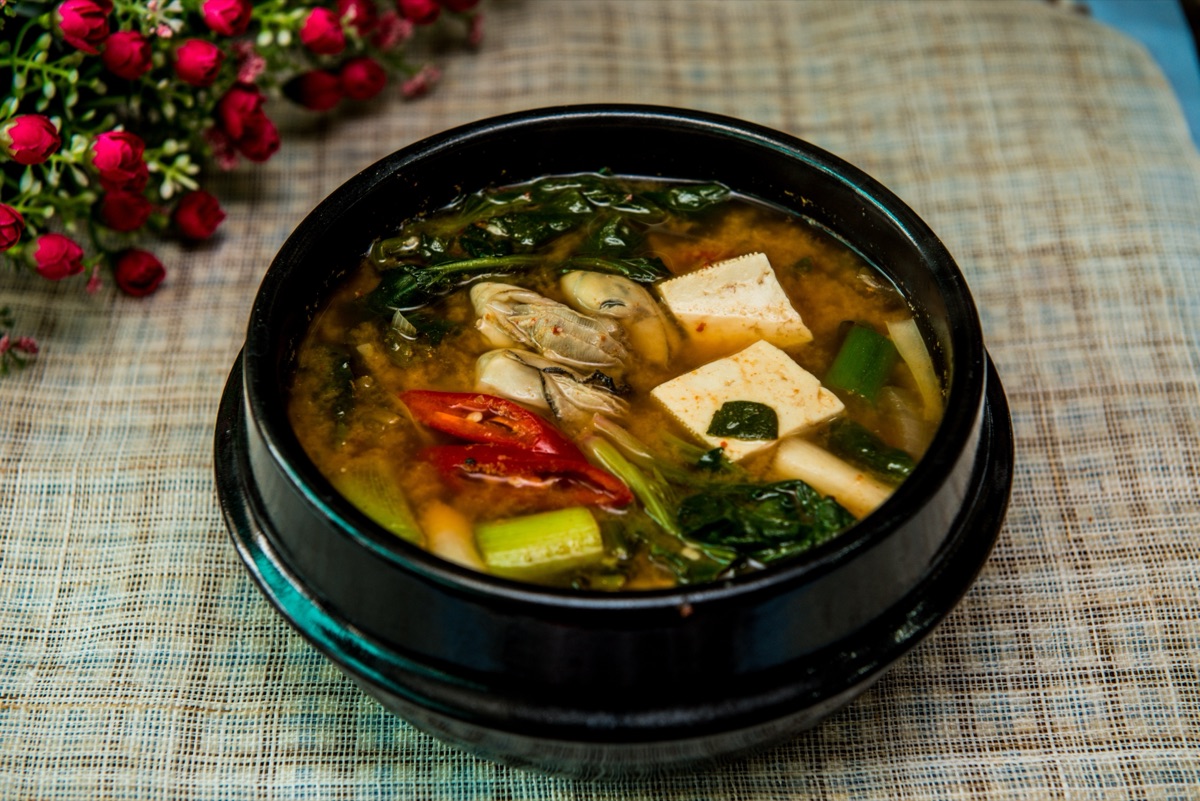
Doenjang-jjigae
An earthy stew of fermented soybean paste with tofu and vegetables — the savory backbone of the Korean table.
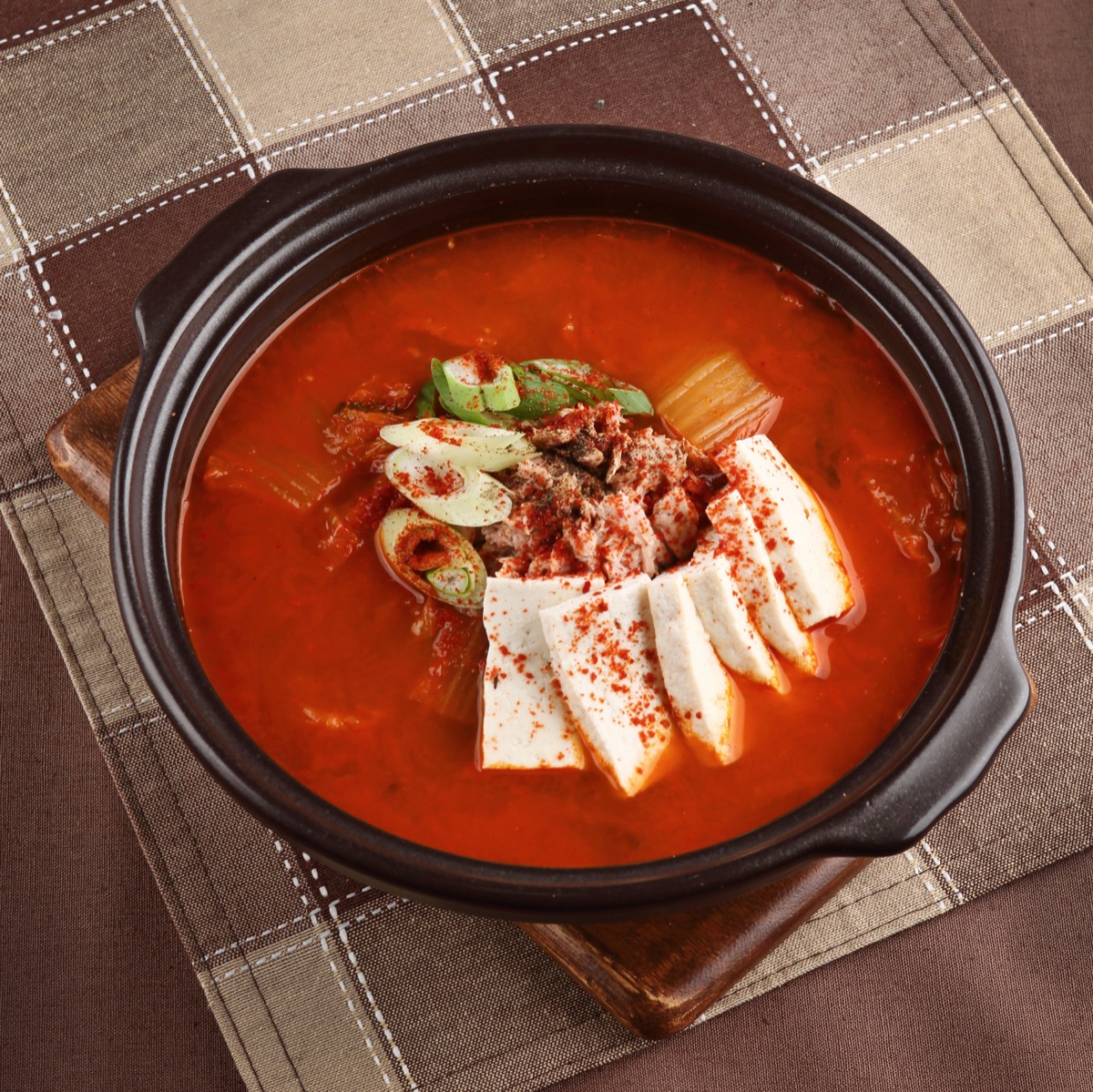
Kimchi-jjigae
A simmering stew of aged kimchi, pork, and tofu — one of the most ordered everyday meals in Korea.
Haemul-jjigae
A bubbling, spiced stew loaded with mixed shellfish, squid, and vegetables in a gochugaru-spiked anchovy broth.
Eat it the right way
Curated for this dish
Ergonomic Korean stainless chopsticks
Built for beginners — grip 순두부찌개 and every Korean dish with confidence. 36,000원 / $35
Comments