Banchan
Doganji-jangajji
Soy-pickled Kohlrabi
Crispy kohlrabi pickled in soy sauce, vinegar, and sugar for a bright, tangy banchan.
Jangajji — Korean soy-pickled vegetables — is one of the country's oldest preservation traditions, and the use of kohlrabi (doganji) as a pickling vegetable represents a regional adaptation that is especially associated with North Korean cuisine and has spread widely through the Korean diaspora. The kohlrabi is cut into cubes or slices, then steeped in a brine of soy sauce, vinegar, sugar, garlic, and chili peppers for several days to several weeks, during which time it absorbs the brine deeply and develops a crunch that is almost explosive — a sharp, clean snap unlike the softer give of fresh vegetables. The resulting banchan is intensely flavored, salty, tangy, and spicy in small doses, meant to be eaten in small amounts as a palate-stimulating accent rather than a main component. Jangajji of all types — garlic, perilla leaves, green chili, radish — serve as long-keeping, intensely flavored additions to the Korean banchan spread, and their ability to last months without refrigeration historically made them essential pantry staples for winter months when fresh vegetables were scarce.
✦ Tastypinch tip
Firm pickled kohlrabi is easy to grip — hold firmly and bite cleanly.
How to eat it
- Eat one or two pieces at a time as a palate cleanser or accent.
- Pair with plain rice and a simple soup for a traditional pairing.
Common mistakes
- Eating too many pieces at once — the concentrated brine flavor is meant to punctuate, not dominate.
Where to try it
- Korean markets' banchan sections
- Traditional Korean set-meal restaurants
You may also like
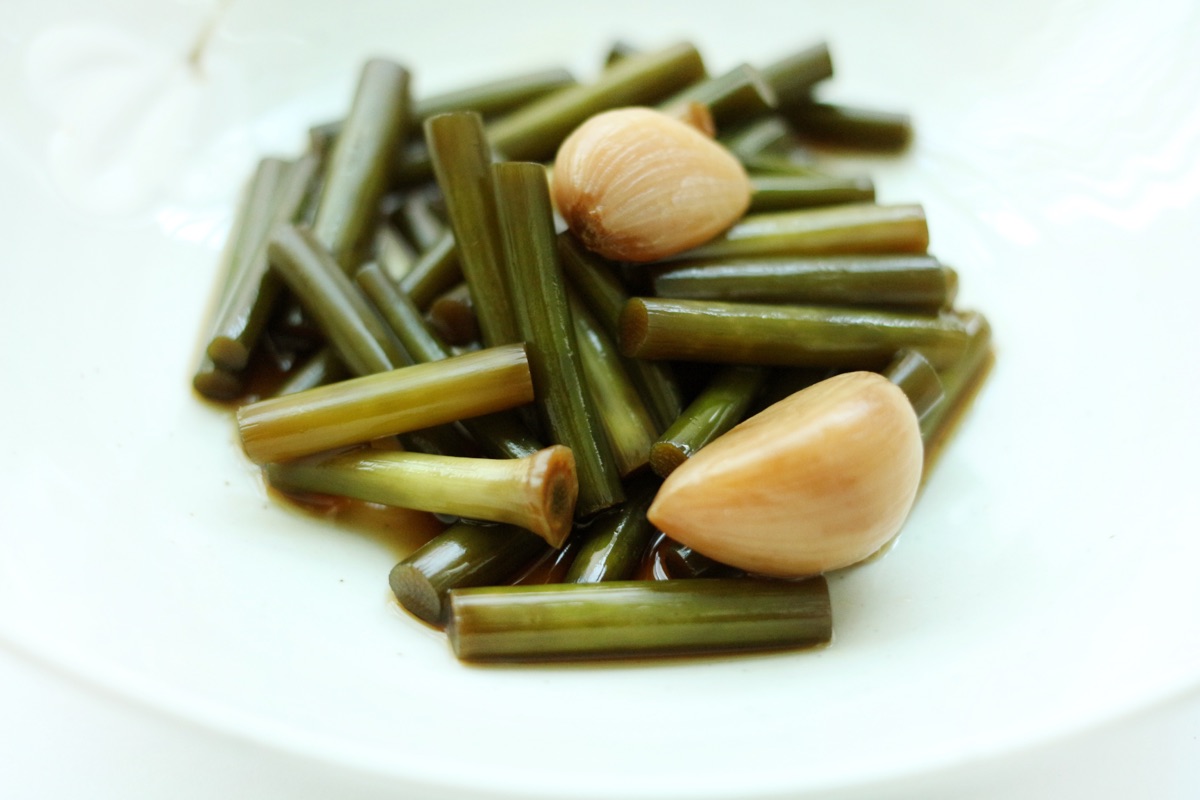
Jangajji
Vegetables pickled in soy sauce, vinegar, or soybean paste — salty, tangy preserves that sharpen any meal.
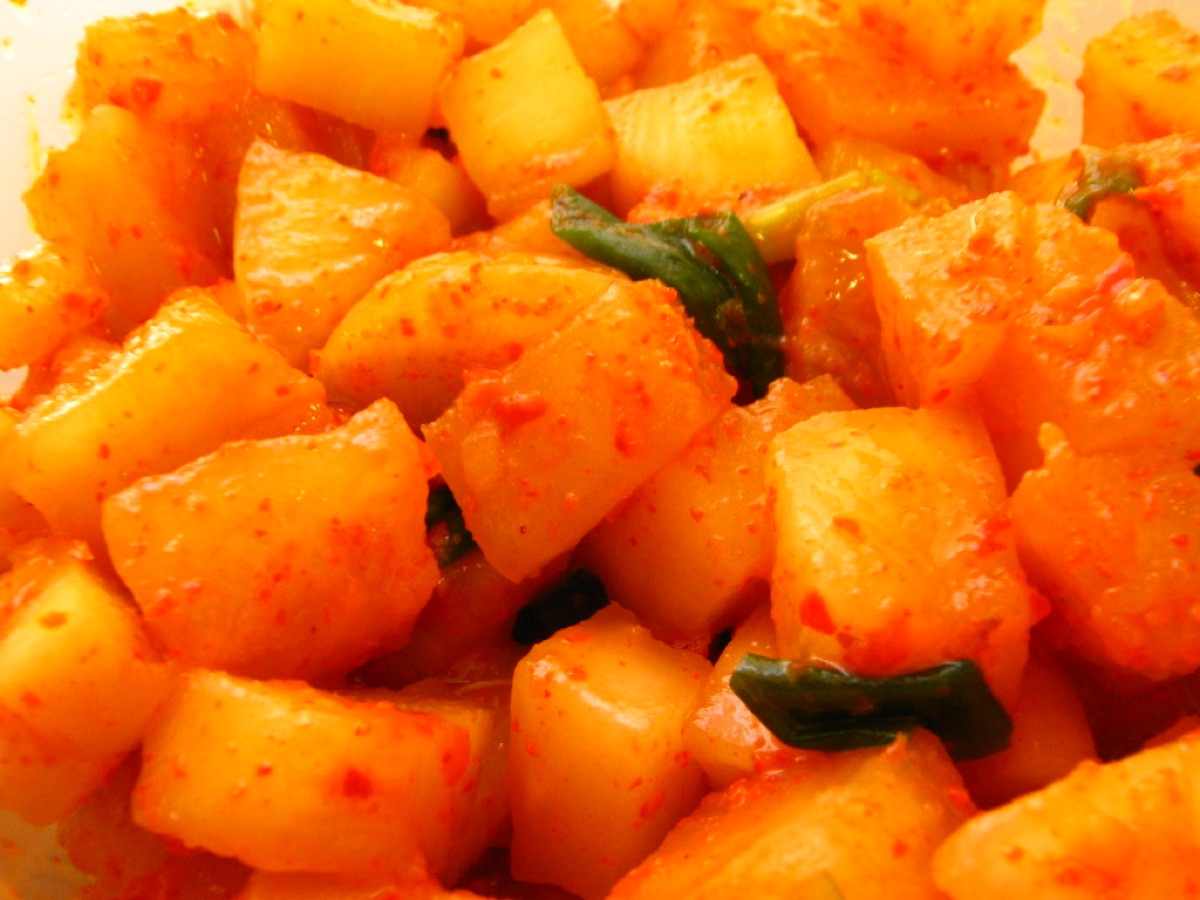
Kkakdugi
Crunchy cubed-radish kimchi — crisp, juicy, and refreshing, especially alongside soups and rice.
Ganjang-gejang
Raw blue crab cured in a soy-garlic brine — although technically raw, it is table-finished and classically paired with grilled dishes.
Eat it the right way
Curated for this dish
Ergonomic Korean stainless chopsticks
Built for beginners — grip 도간지장아찌 and every Korean dish with confidence. 36,000원 / $35
Comments