Soup & stew
Sungjeonge-jjigae
Spicy Anchovy Stew
A bold, fiery stew made with fresh or frozen pollack (saengtae), radish, and a gochugaru-heavy broth.
Saengtae-jjigae uses the freshest form of the Korean favourite fish, myeongtae (Alaska pollack) — when caught fresh it is called saengtae, when dried it becomes bugeo, and when frozen it is dongtae, each preparation yielding a different flavour and texture. The fresh or frozen version used in jjigae has a clean, flaky white flesh that holds its shape reasonably well in the spiced broth and contributes a lighter, fresher oceanic note compared to the earthier dried-fish preparations. The stew is built on a base of Korean radish (mu) and spring onion, which absorb and moderate the gochugaru heat, and doenjang is sometimes added in small amounts for depth. It is particularly popular in winter, when pollack is at its freshest and most flavourful, and cold-weather Korean diners find the combination of hot spiced broth and flaky white fish deeply satisfying. The dish is associated with the east coast city of Sokcho, which sits near the major pollack fishing grounds of the East Sea, and visitors to Sokcho make a point of eating saengtae-jjigae in one of the harbour-front restaurants. It is less well known to foreigners than tuna or clam jjigae but is a beloved staple among Koreans.
✦ Tastypinch tip
Use chopsticks to navigate around bones in the fish pieces.
How to eat it
- Remove pollack bones carefully — the fish has fine bones even when filleted.
- Let radish pieces cool slightly before eating as they trap heat.
- Mix the remaining spiced broth with rice at the end of the meal.
Where to try it
- Sokcho harbour restaurants, Gangwon Province
- Fish market restaurants in Busan
You may also like
Haemul-jjigae
A bubbling, spiced stew loaded with mixed shellfish, squid, and vegetables in a gochugaru-spiked anchovy broth.
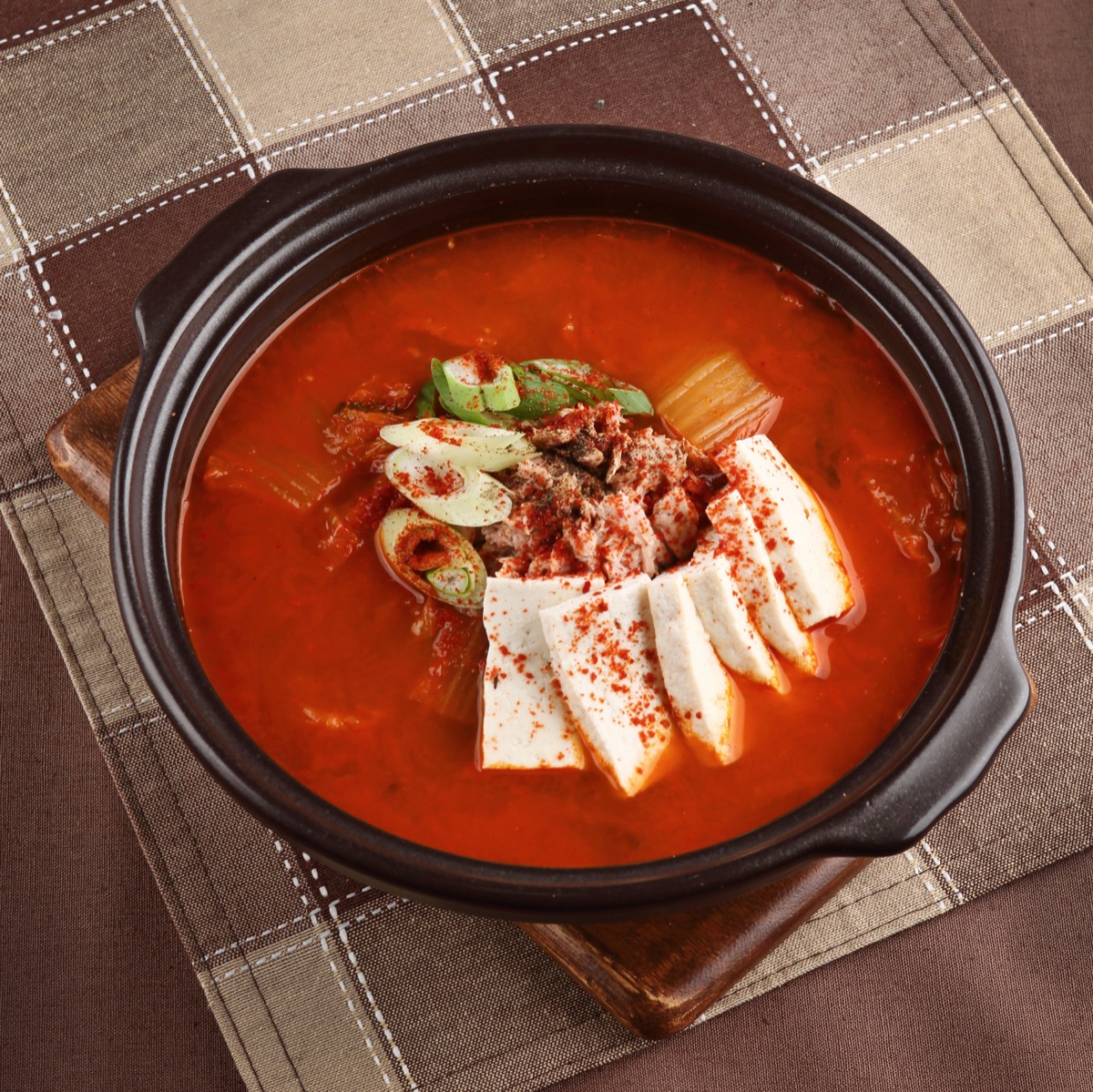
Kimchi-jjigae
A simmering stew of aged kimchi, pork, and tofu — one of the most ordered everyday meals in Korea.
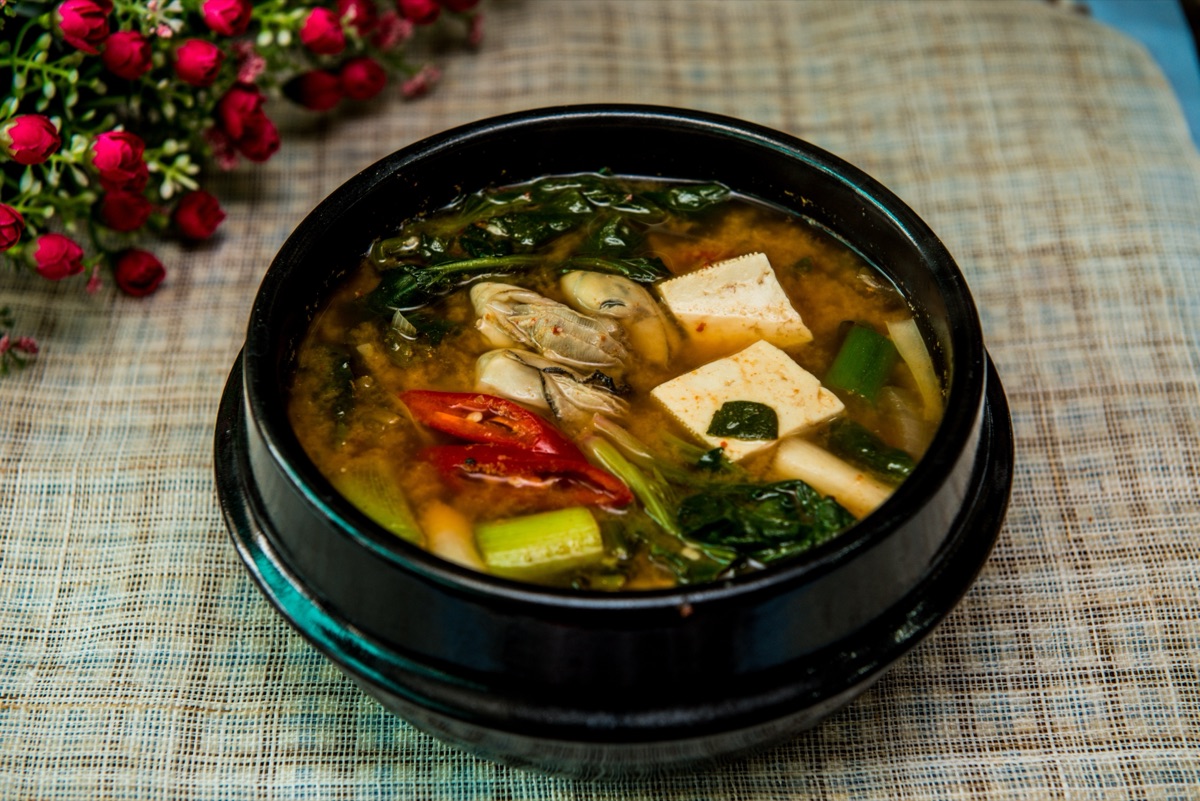
Doenjang-jjigae
An earthy stew of fermented soybean paste with tofu and vegetables — the savory backbone of the Korean table.
Eat it the right way
Curated for this dish
Ergonomic Korean stainless chopsticks
Built for beginners — grip 생태찌개 and every Korean dish with confidence. 36,000원 / $35
Comments