Banchan
Kkaennip-jangajji
Soy-pickled Perilla Leaves
Fresh perilla leaves stacked and marinated in soy sauce, sesame, and chili.
Kkaennip-jangajji is a banchan of extraordinary aromatic intensity, stacking layers of perilla leaves — a member of the mint family with a flavor that bridges basil, anise, and mint — in alternating pours of a soy-based marinade that seeps between each leaf and transforms the bright, herbal freshness of raw perilla into something deep, savory, and complex over several days. The marinade typically combines soy sauce, fish sauce, gochugaru, garlic, green onion, sesame oil, and sesame seeds, and the leaves are pressed under the liquid weight until they turn a deep, dark green and each leaf has absorbed the sauce through every pore. A single leaf wrapped around a bite of rice is a profound sensory experience — the dense, sesame-forward soy marinade against the perilla's herbal sharpness, all anchored by the neutral starch of rice — and it is this three-way harmony that has made kkaennip-jangajji one of the most irresistible rice companions in the Korean banchan canon. Perilla is also eaten raw as ssam — a leaf used to wrap grilled meat — so having it in both fresh and pickled form on the table at a Korean BBQ is common practice, showcasing the leaf's range.
✦ Tastypinch tip
The stacked leaves can be separated carefully — slide chopsticks under the top leaf and lift gently.
How to eat it
- Peel one leaf from the stack and wrap it around a bite of rice.
- Eat as an accent alongside grilled meats.
- Appreciate the contrast of the herbal perilla against the deep soy marinade.
Common mistakes
- Eating too many at once — the concentrated soy flavor is meant as accent, not main dish.
Where to try it
- Korean BBQ restaurants (often served as banchan)
- Traditional Korean set-meal restaurants
You may also like
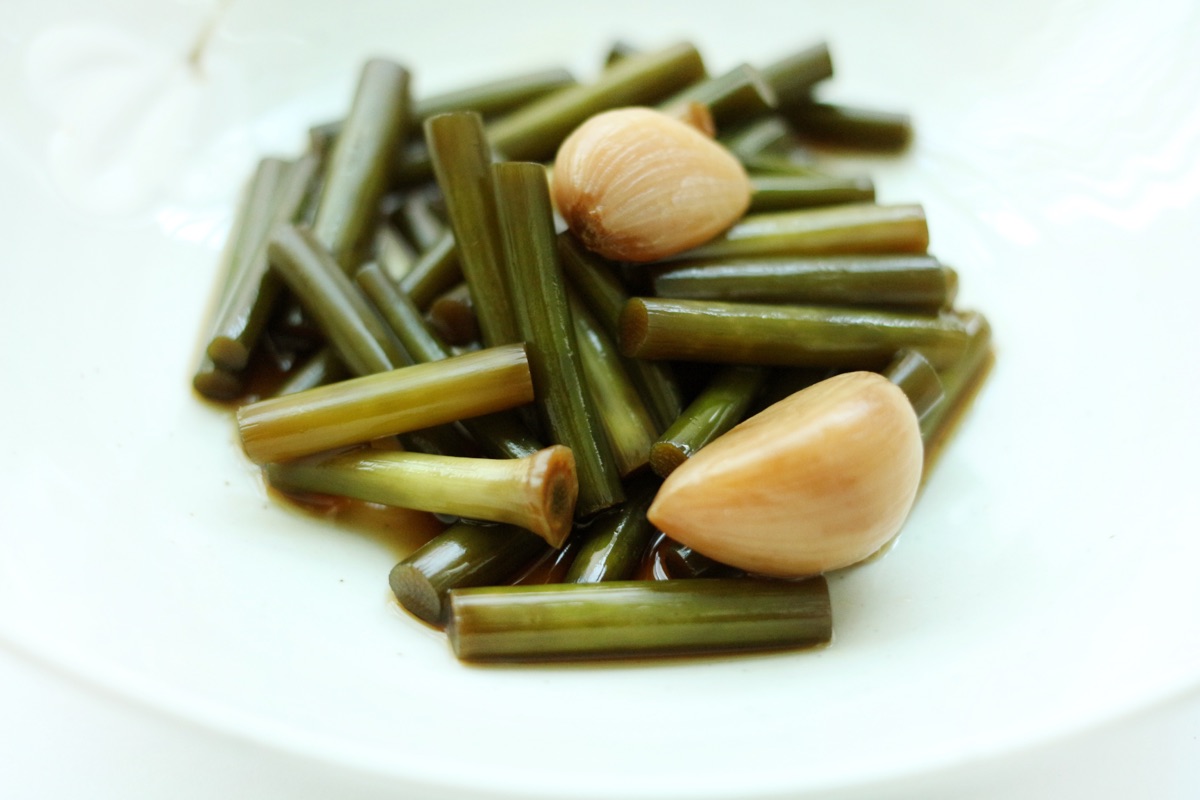
Jangajji
Vegetables pickled in soy sauce, vinegar, or soybean paste — salty, tangy preserves that sharpen any meal.
Manul-jangajji
Whole garlic cloves cured in soy sauce and vinegar until tender, mellow, and deeply savory.
Ganjang-gejang
Raw blue crab cured in a soy-garlic brine — although technically raw, it is table-finished and classically paired with grilled dishes.
Eat it the right way
Curated for this dish
Ergonomic Korean stainless chopsticks
Built for beginners — grip 깻잎장아찌 and every Korean dish with confidence. 36,000원 / $35
Comments